
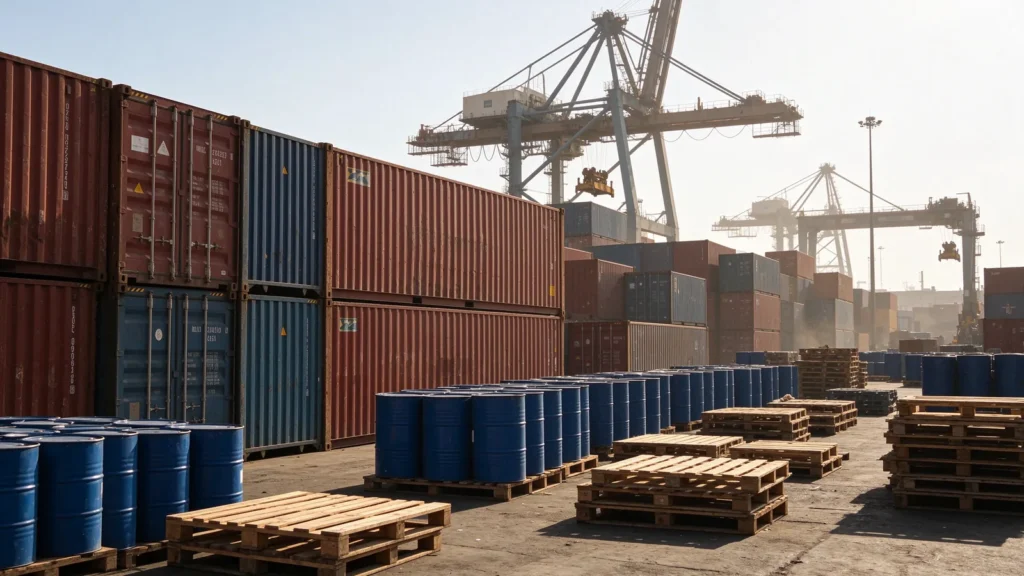
Senegal has one import gateway, a currency tied to the euro, and a distributor network that already prices oil per litre. It does not have a mild climate or cheap containers. Those two facts decide whether a first shipment earns a margin or sits until the drum paint blisters. This guide groups the decisions by the situation you are actually in.
If Your Buyers Run Loaded Trucks, Grade for Heat Before You Grade for Brand
Engine oil keeps hot metal apart, carries heat away, holds soot and leaves alkalinity to neutralise acid. In the Dakar corridor the air sits near 30°C all year and runs hotter over sunlit asphalt, while a loaded tipper holds the sump at 100–120°C for hours. A 15W-40 with high-temperature/high-shear viscosity of 3.5 mPa·s or more and TBN of 10+ keeps a film and still neutralises sulphur from local fuel.[1] A 5W-30 belongs in the line only for recent pickups and vans, and then with the OEM approval printed on the label, not a viscosity claim. A 20W-50 still earns shelf space where older petrol pickups and generators dominate.[2] What African buyers should ask a Chinese supplier is mostly a grade question, not a price question.
If Your Volume Sits Under One Container, Choose Packaging Around Sell-Through
A 20ft holds about 80 drums of 200L (16,000 litres), or 600–720 pails of 20L, or 1,100–1,200 cartons of 4L, depending on pallet pattern. Drums give the lowest landed cost per litre and the largest cash commitment: 80 drums of one grade is one bet on one buyer. Pails move through garages and roadside resellers at a pace that matches their cash cycle. Cartons serve forecourt shelves. A mixed load wastes volume unless the plan is drawn before production.[3] Landed cost per litre belongs in the decision, not in the catalogue.
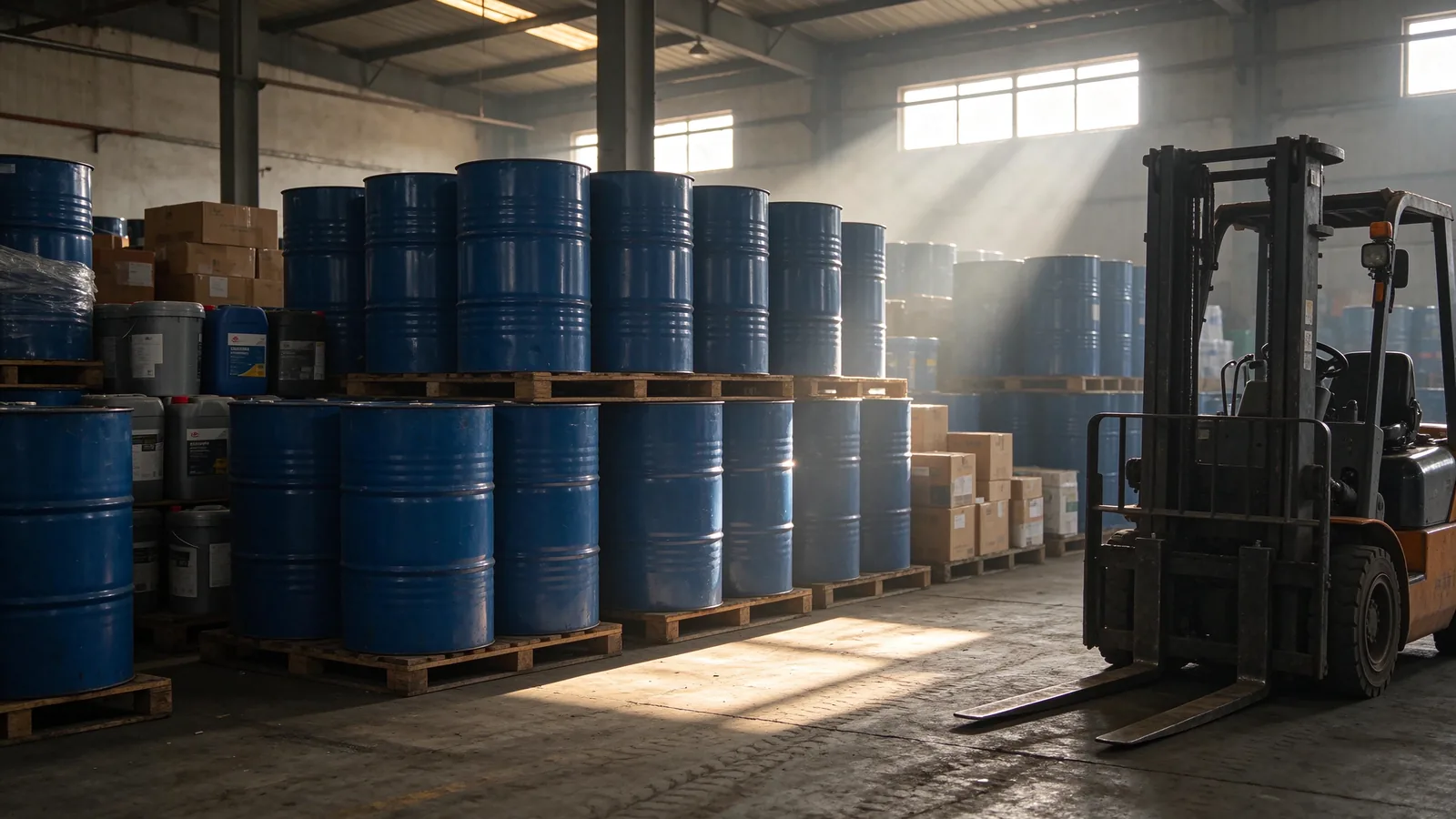
If This Is Your First Shipment, the Border File Sets the Margin
Lubricants sit under HS heading 2710, and the tariff band is not a rounding error: the UEMOA common external tariff runs from zero to 35 percent, and local VAT is charged on duty-paid value plus port charges, not on the invoice alone.[4] Ask the broker for a written landed-cost sheet covering duty band, VAT, handling, storage and the cargo-tracking fee before signing the proforma. Clearing runs through the electronic single window, and a missing document costs more than the document once storage charges begin. Confirm in writing whether the consignment needs a conformity assessment before shipment, and who signs it. The Ivory Coast document set is a close regional template, lot numbers included.[5]
If Your Channel Is Mixed, Split the Portfolio Rather Than the Container
Fleets pay monthly and want drums on schedule; garages pay on the day and want pails; forecourts want cartons and shop margin. Financing all three from one drum consignment is how distributors run short of cash by the second quarter. Set a stock rule: drums for the two fleet grades you can bill against, pails for workshops, cartons for resale, and a deposit before a new account takes credit.[6] Channel mapping in Ghana shows the same split working one market west.
If You Want Your Own Label, Settle MOQ and French Artwork First
A private label is a specification plus an artwork file, not a sticker. Minimum order quantity is set per grade and per pack, so four SKUs in three packs means twelve minimums; asking for one pallet of each is the fastest way to a quotation that never arrives. Labels print in French with net volume, grade, API or ACEA category, batch and lot number. Approve a printed proof, keep it as a contract exhibit, and match the drum lot to the certificate of analysis before the container leaves. The Tanzania guide runs the same sequence.
| Decision | If this is true | Then choose | Why it holds | Cost if ignored |
|---|---|---|---|---|
| Grade line | Trucks run loaded at 30°C all year | 15W-40, HTHS 3.5+, TBN 10+ | Film survives heat and acidity | Shear, consumption, warranty claims |
| Pack size | Sales go through garages and resellers | 20L pails and 4L cartons | Sell-through is per litre | Cash parked in drums |
| First order | No landed-cost history here | One 20ft, two grades, two packs | One cycle teaches freight and fill | A 40ft of one grade goes dead |
| Border file | Duty band still unclear | Written broker quote first | Duty plus VAT sets margin | Storage on a held container |
| Channel | Fleets and resellers both in the book | Separate stock and credit rules | Cash cycles differ | Capital spent twice |
Frequently Asked Questions
Which grades move fastest? 15W-40 diesel for trucks and buses, 20W-50 for older petrol pickups and generators, 5W-30 for recent cars. Confirm with three months of your own sell-through before widening the list.
Does every consignment need a conformity certificate? Not every one, and the answer moves with product and pack. Get it in writing from the broker and the standards authority before the order, because a certificate issued after shipment does not release a container.
Can drums and pails share a container? Yes, with a loading plan drawn in advance. An improvised mixed pattern wastes volume and can lift freight per litre by a third on a half-filled box.
How much working capital does one container need? Goods value plus duty, VAT on duty-paid value, port handling and inland haulage, then the storage you pay if clearing slips a week.