
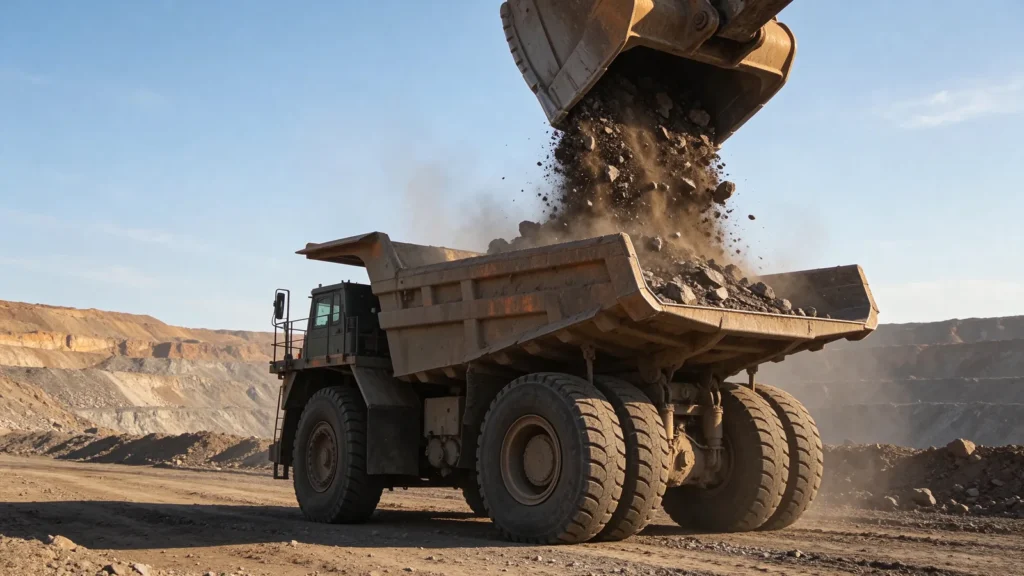
Congo’s lubricant business is not really a retail business. It is a supply contract to fleets that cannot stop: copper and cobalt haulers in Lualaba, port trucks on the corridor, and mining equipment running three shifts in dust. A distributor who treats those customers as walk-in buyers loses them to whoever can guarantee a drum at the right time. The product is ordinary 15W-40; the difficulty is the corridor, the documents and the stock position.[1][2]
If Your Customers Are Copper Belt Fleets, the Duty Cycle Sets the Grade
Haul trucks on mine roads run loaded, hot and slow, with high ambient and heavy dust, and the engine spends hours near the top of its load map. That profile asks for HTHS in the 3.5 to 3.7 mPa·s band, which is the 15W-40 territory and not the 10W-30 one: SAE J300 sets a far lower floor for a 10W-30, and film thickness under sustained load is what a haul truck cannot lose.[3] Where the equipment is newer and the OEM approval names a lower grade for fuel reasons, follow the approval, but treat a change of grade as an engineering decision rather than a purchasing one.
Where the Corridor Decides Your Cost: Matadi, Dar es Salaam, Lobito
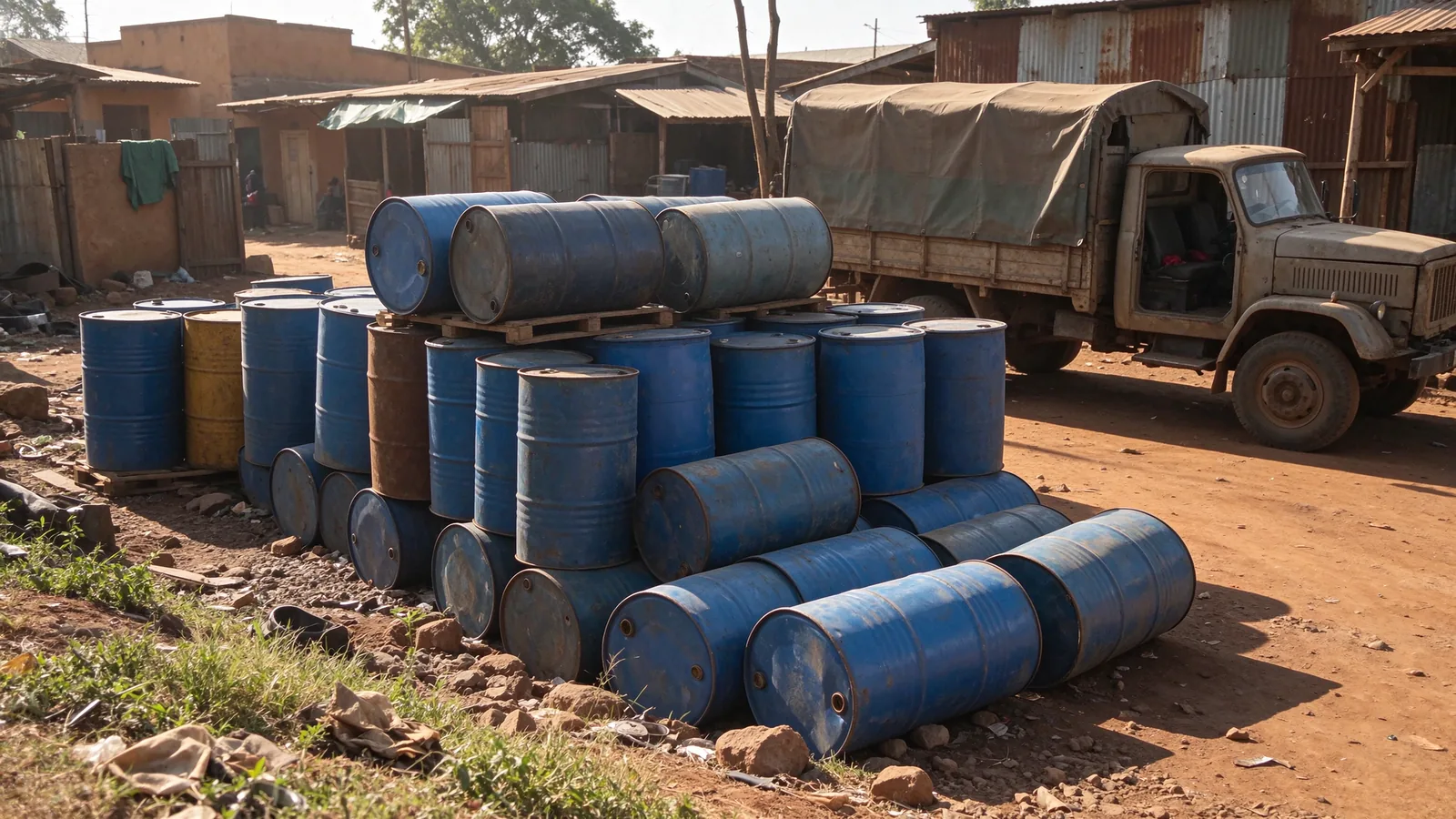
DRC has its own Atlantic port at Matadi, but the copper belt is closer to the Indian Ocean, which is why most inbound containers land at Dar es Salaam or, increasingly, at Lobito on the Angolan coast, and move inland by truck or rail. Each corridor carries a different combination of transit time, border delay and cost per tonne-kilometre, and the difference between the cheapest and the fastest is often several weeks.[2] For a distributor, that transit time is working capital: stock that spends six extra weeks on the road has to be financed, insured and re-ordered earlier. Costing the route properly is the same exercise described in landed cost for imported engine oil.
What Mining Contracts Require Beyond the Oil
Mining buyers audit. Expect a request for the batch COA with lot numbers, a safety data sheet in French and English, a statement of composition for the HSE file, and often a sample retained by both parties. Contracts also ask for delivery reliability measured in days and for documentation that survives an internal audit six months later. A supplier who can produce a lot-traceable COA on demand is worth more than one who is five percent cheaper, and this is the same standard that fleet buyers in Kenya apply to their own suppliers.[4]
Blending Locally or Importing Finished Oil: the Volume Threshold
Local blending lowers freight per litre and shortens the lead time, but it demands capital: tanks, a lab, a base-oil supply, and a quality system that customers will audit. Below a few hundred thousand litres a year, importing finished drums and pails is usually cheaper than building a plant, and the break-even moves with the corridor cost rather than with the oil price. Importing also keeps the OEM approval intact, because the approval attaches to a formulation produced under a named quality system, not to a tank in a warehouse.[5]
Stocking Policy Where a Reorder Takes Eight Weeks
Plan on lead time, not on consumption. Two grades of 15W-40, one 10W-30 for newer units, one hydraulic oil and one grease cover most of the demand, and the reorder point should be set at the consumption during transit plus a safety margin, not at a percentage of the warehouse. Where a single customer represents more than a third of volume, hold a dedicated allocation for that account; where the customer base is wide, hold breadth instead of depth. Equipment fleets in material handling follow the same logic, as described in engine oil for material handling equipment.
| Fleet type | Duty profile | Default product | Main risk | How to verify |
|---|---|---|---|---|
| Mine haul trucks | Loaded, hot, dusty, three shifts | 15W-40 CK-4[3] | Film loss, contamination | HTHS 3.7, oil analysis cycle |
| Corridor trucks | Long distance, mixed load | 15W-40 CI-4 or CK-4 | Oxidation over long drains | TBN trend, drain interval |
| Excavators and loaders | Hydraulics plus engine | 15W-40 plus ISO VG 46[1] | Wrong fluid cross-fill | Label check, colour coding |
| Generators on site | Standby, intermittent load | 15W-40, high TBN | Sludge after idle periods | Oxidation result, service log |
| Workshop and retail | Small volumes, many grades | 20L pails, 4L cartons | Dead stock, obsolete spec | Rotation record, spec currency |
Frequently Asked Questions
Is 15W-40 the only sensible grade for Congo? For loaded haul and corridor fleets it is the default; newer equipment with a lower-grade approval can run 10W-30 without harm when the approval is documented.[3]
Can I ship pails instead of drums? Yes, and many distributors do, but pails cost more per litre and take more container volume, so the mix should follow the customer mix rather than the freight rate alone.[2]
What documents does a mining buyer ask for? A batch COA with lot traceability, a French and English SDS, a composition statement for HSE, and usually a retained sealed sample.[4]
How long should the first contract run? Long enough to cover one full reorder cycle, so the customer sees a delivery on time before the volume commitment is fixed.[5]