
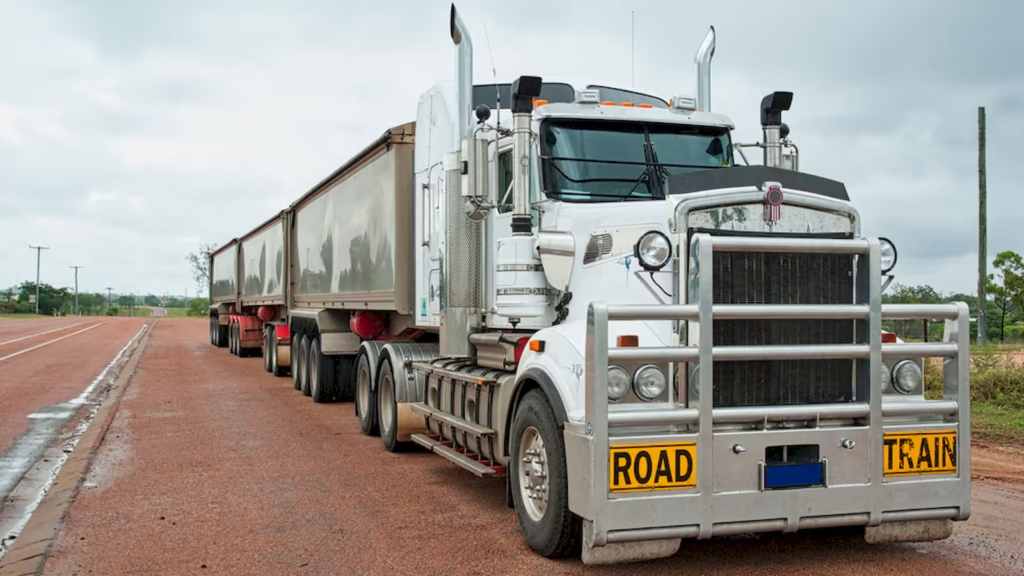
New South Wales is not a cold market, which is why many fleets default to 15W-40 and never revisit the decision. Modern low-emission diesel engines, however, are designed around lower-viscosity oils, and a 10W-30 that carries the right specification can deliver easier cold starts, slightly better fuel economy and cleaner piston deposits than a 15W-40 of the same category. The question is not whether 10W-30 works in Australian heat, but whether the specific 10W-30 and the specific engine are matched.
The fleet mix in NSW ranges from Sydney metro distribution work with constant stop-start, through Hunter Valley and western freight routes at highway speed and full load, to construction and council fleets on low annual hours. Each duty cycle puts a different demand on the oil, and the same grade can be right for one and wrong for another.
| Criterion | 10W-30 | 15W-40 | Practical effect |
|---|---|---|---|
| Cold start at 5–10°C | Easier cranking, faster pressure | Thicker, slower to circulate | Less start-up wear in winter mornings |
| Fuel economy | Typically 0.5–1.5% better | Baseline | Meaningful at high annual distance |
| High-temperature viscosity | Lower HTHS unless formulated up | Higher | Thin oils need OEM approval for hot, loaded duty |
| Piston cleanliness | Better with modern additive systems | Good but older chemistry | Less deposit build-up over long drains |
| Oil consumption | Can rise in worn engines | Lower | Worn engines may use more 10W-30 |
The fuel saving is real but modest, and it only survives if the engine is in good condition. A worn engine with wide bearing clearances can consume more 10W-30 and show lower hot oil pressure, which erodes the benefit.
The grade system is explained in SAE viscosity grades explained, and shipping requirements in export documentation for engine oil imports.
| Fleet type | Engine era | Fit | Note |
|---|---|---|---|
| Sydney metro distribution | 2013 or newer, low-emission diesel | Strong fit | Stop-start duty rewards easy cold flow |
| Long-haul freight, full load | Modern with OEM approval | Fit with approval | Confirm HTHS and OEM specification first |
| Long-haul freight, pre-2010 | Older mechanical injection | Poor fit | 15W-40 matches clearances and wear margin |
| Construction and plant | Mixed, high idle hours | Conditional | Heat and dust favour 15W-40 unless approved |
| Council and utility fleets | Mixed | Split by engine | One grade per engine family beats one grade for all |
| High-kilometre worn engines | Over 500,000 km | Poor fit | Consumption and pressure will likely worsen |
Engine oil is not regulated as a hazardous chemical in the way a pesticide is, but the shipment still has to satisfy biosecurity, labelling and dangerous-goods rules.
- Timber packaging must meet ISPM 15 treatment and marking requirements.
- The Department of Agriculture checks for contamination, soil and packaging pests at the border.
- Safety data sheets must be available and consistent with the Australian work health and safety model.
- Labels should carry the viscosity grade, API and ACEA performance claims and batch identification.
- Dangerous goods classification affects container loading and segregation, not just paperwork.
- Import permits and duties depend on the tariff classification declared for each product.
| Element | Typical | Buyer note |
|---|---|---|
| Port of discharge | Port Botany, Sydney; Newcastle for northern distribution | Compare total cost including interstate road legs |
| Ocean transit | Roughly 18–30 days depending on routing | Add customs clearance and quarantine inspection time |
| Pack format | 200 L drums, 1,000 L IBCs, 20 L pails | IBCs reduce handling cost but need dispensing equipment |
| Inland delivery | Road freight from port | Book capacity ahead during peak periods |
| Seasonality | Stock build before summer and harvest peaks | Order three to four months before the peak |
A 10W-30 bought at a lower price per litre can still cost more per kilometre if it raises consumption, shortens the drain or causes a warranty dispute. The comparison should include the drain interval, top-up volume, filter cost and the OEM approval status of the product. Fleets that run 100,000 km a year will see the fuel effect clearly; fleets that run 20,000 km a year should weigh the fuel saving against the risk of a specification mismatch.
If-then: if the engine is post-2013, OEM-approved for 10W-30 and runs high annual distance, then the thinner grade is the better economic choice. If the engine is older, worn or operating at sustained full load without an approval for a thin grade, then 15W-40 remains the safer purchase.
Is 10W-30 suitable for Australian summer heat?
Yes, when the oil carries the right specification and the OEM approves it. Modern engines are designed around lower-viscosity oils, and ambient heat is handled by the cooling system and the oil’s high-temperature viscosity.
Will 10W-30 reduce fuel consumption?
Typically by half a percent to one and a half percent in a suitable engine. The gain is small and should be weighed against the cost of any increase in oil consumption.
What specification should I look for?
The OEM’s own approval plus the API category the engine requires, commonly CK-4 for modern diesel. ACEA E6 or E9 may also be relevant depending on the engine.
Does timber packaging need treatment for Australia?
Yes. Solid timber packaging must meet ISPM 15 and carry the correct mark, or the shipment can be held or treated at the importer’s cost.
How early should I order before a peak season?
Three to four months before the peak, to cover production, ocean transit, clearance and inland delivery.
Running a NSW fleet and deciding between 10W-30 and 15W-40? Send us the engine models, annual kilometres and duty cycle — we will check the OEM approval, recommend the grade and quote a landed cost to Port Botany.