
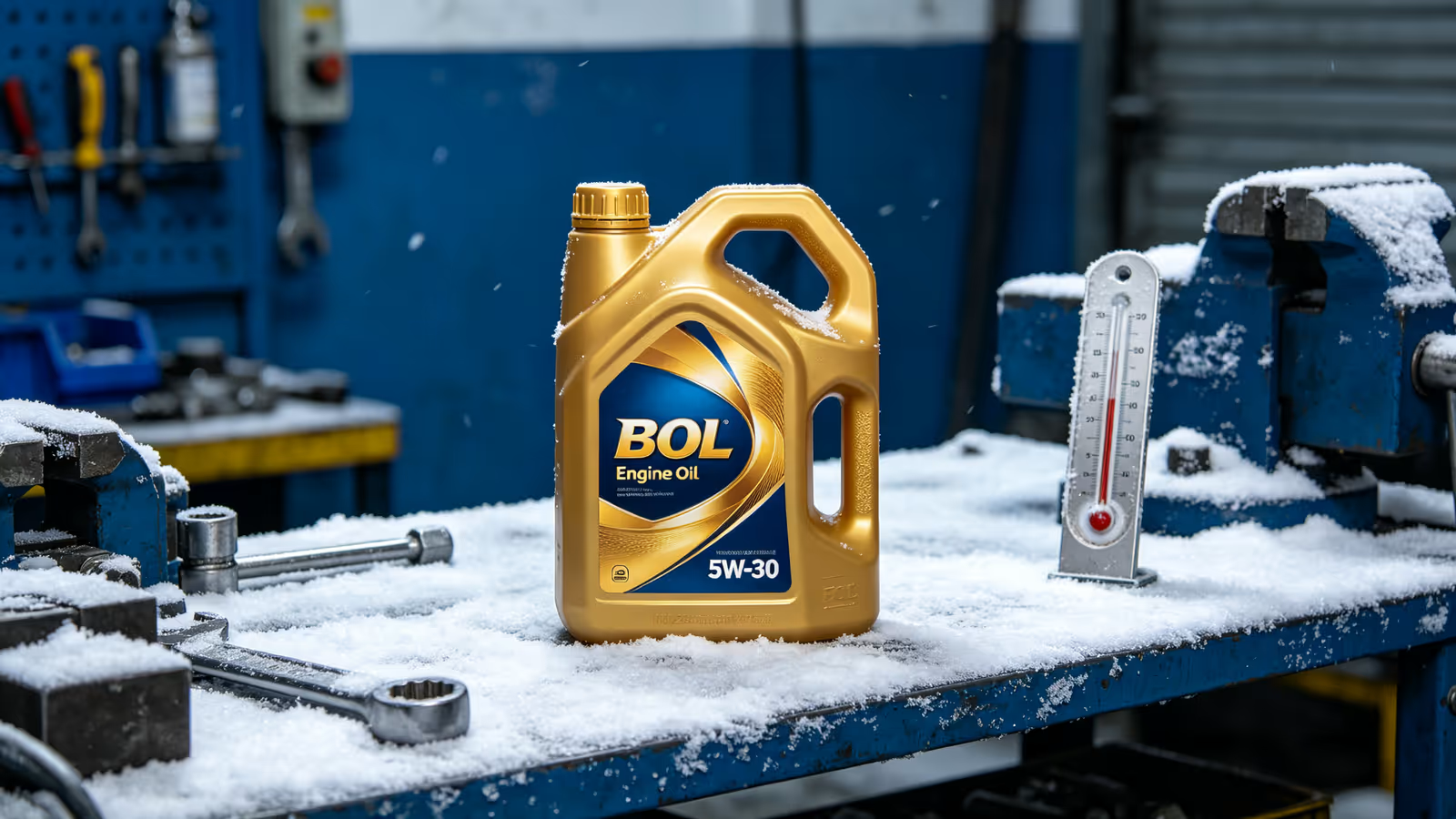
When sourcing engine oil for distribution, one of the first things buyers need to understand is the SAE viscosity grade printed on every container — 0W-20, 5W-30, 5W-40, 10W-40 or 15W-40. These numbers are not brand marketing. They describe how the oil flows under defined temperature conditions, and they directly affect engine protection, cold-start performance and fuel economy.
What the Two Numbers Actually Mean
An SAE grade such as 5W-30 contains two parts separated by the letter “W”, which stands for Winter.
- The number before the “W” (e.g. 5W, 10W, 0W) indicates low-temperature performance — how easily the oil flows and circulates when the engine is cold. A lower number means better cold-start flow.
- The number after the “W” (e.g. 30, 40, 50) indicates the oil’s viscosity at normal engine operating temperature (around 100°C). A higher number means the oil stays thicker at operating temperature, which suits heavier loads and higher temperatures.
In simple terms, a multi-grade oil such as 5W-30 behaves like a thin “5” grade oil at low temperature for easy starting, and like a thicker “30” grade oil at operating temperature for durable protection.
Common Grades and Typical Applications
| SAE Grade | Typical Application | Common Markets |
|---|---|---|
| 0W-16 / 0W-20 | Modern low-friction gasoline engines | Japan, North America, new European models |
| 5W-30 | Passenger cars, light commercial vehicles | Europe, Middle East, Asia, Africa |
| 5W-40 | European and turbocharged engines | Europe, Russia, Middle East |
| 10W-40 | Older engines, high-mileage vehicles | Africa, Latin America, South Asia |
| 15W-40 | Heavy-duty diesel engines | Global commercial fleets |
Why Viscosity Matters for Your Market
Different markets and climates demand different grades. A distributor serving a hot region such as the Middle East or West Africa may see strong demand for 20W-50 or 15W-40, while a market with cold winters needs 0W-20 or 5W-30 for reliable cold starts. Understanding the local vehicle park and climate profile helps you stock the right mix and avoid slow-moving inventory.
Beyond the Grade: Base Oil and Performance
Two oils with the same SAE grade are not automatically interchangeable. Performance depends on the base oil technology (mineral, synthetic, fully synthetic or ester), the additive system, and the API, ACEA or JASO specification. When choosing a supplier, always confirm the full specification — viscosity grade alone is only the starting point.
Looking for a reliable engine oil supply partner? BOL supplies passenger car, light commercial, heavy-duty diesel and motorcycle engine oils across a wide range of SAE grades and specifications. Contact our team to discuss your market requirements.