
Packaging is the first thing a buyer sees and the first thing that can go wrong on an international engine oil order. The right packaging protects the product, keeps freight cost sane, and avoids customs holds. The wrong packaging arrives as rusted drums, leaking cartons, and rejected wood. This guide walks through how to choose the right packaging for your shipment.
International shipping is hard on packaging. A container crosses oceans, changes temperature, meets humidity, and is handled multiple times. Engine oil packaging must survive all of it:
- Waterproof: rain and condensation must not reach the oil.
- Sealed: caps and lids must not leak under vibration.
- Strong: cartons and drums must take stacking and handling.
- Labeled: marks stay readable after a damp voyage.
- Compliant: wood packaging meets ISPM-15 rules.
| Pack Size | Best Use | Shipping Consideration |
|---|---|---|
| 1L / 4L bottles | Retail, garages | Cartons, moisture-resistant board |
| 20L / 25L pails | Workshops, small fleets | Pails on pallets, strapped |
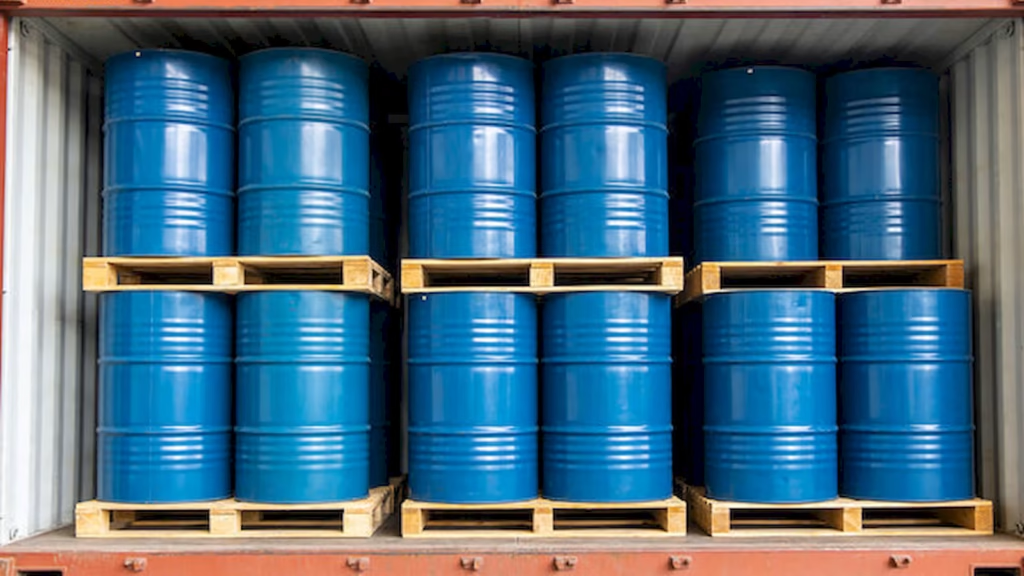
| 208L drums | Truck fleets, bulk | Upright, palletized, braced |
| IBC totes | Very large fleets | Needs special handling and space |
Match the packaging to the channel you sell into, then to the voyage. A retail order in drums is as wrong as a fleet order in 1L bottles.
- Use strong, moisture-resistant cartons that stack well.
- Fill the carton tightly so bottles do not move.
- Protect caps from impact with dividers or wrap.
- Seal and test caps before loading.
- Load upright and secure on pallets.
- Use dunnage so drums do not knock together.
- Wooden crates and pallets must be ISPM-15 treated and marked.
- Untreated wood can be rejected at the destination port.
- Brace and dunnage the container so nothing shifts at sea.
- Photograph the loaded container for the claim file.
- Heavier packaging costs more to ship — balance protection against weight.
- LCL (shared container) needs stronger packaging than FCL.
- Palletize to speed loading and reduce handling damage.
- Confirm carton cube and weight against the container plan.
A good supplier specifies the packaging for you and shows you how it is loaded. Ask for the packaging spec and a photo of the loaded container. If the supplier cannot show you either, that is a risk.
The cheapest packaging is not the cheapest if it leaks or arrives damaged. Buy packaging that survives the voyage, not the lowest quote.
The material quality matters as much as the pack size. Cheap carton board softens in humidity, and thin drums dent and leak in handling. Know what you are specifying:
| Material | Good For | Watch Out For |
|---|---|---|
| Double-wall carton | Bottles, pails on pallets | Costs more, saves claims |
| Single-wall carton | Low-weight, short-haul | Weak in humidity |
| Coated / lined drums | Long voyages | Higher cost, better seal |
| Standard drums | Most routes | Brace and seal well |
A cheaper carton or drum saves a little freight and a lot of headaches later. When a voyage is long or humid, spend on the barrier, not just the box.
Before you order, confirm the packaging spec in writing: pack sizes, carton/drum material, pallet configuration, and how the container is loaded. A supplier who specifies and photographs the load is a supplier who stands behind the voyage.
- Ask for the packaging spec sheet before ordering.
- Request photos of a loaded container.
- Confirm pallet weight and cube for the freight plan.
We ship engine oil in seaworthy packaging: sealed drums, moisture-resistant cartons, ISPM-15 crates, and braced container loads for LCL and FCL — ask us to spec the packaging for your order.
What is the best pack size for export?
It depends on your channel. Retail needs 1L/4L bottles in strong cartons; fleets need 20L/25L pails or 208L drums; very large fleets use IBC totes.
Does wooden packaging need special treatment for export?
Yes. Wooden crates and pallets crossing borders must be ISPM-15 treated and marked, or the cargo can be rejected at the destination port.
How do I stop drums leaking or rusting at sea?
Seal and test caps, load upright, brace the load, and use moisture-resistant outer protection. Add desiccant on long, humid voyages.
Is stronger packaging worth the extra freight cost?
Usually yes for LCL, which is handled more. Balance weight against protection — a claim costs more than a few extra kilos of carton.
What should I ask the supplier about packaging?
Ask for the packaging spec, the carton/drum dimensions and weight, and photos of a loaded container. If they cannot show you, that is a risk.