

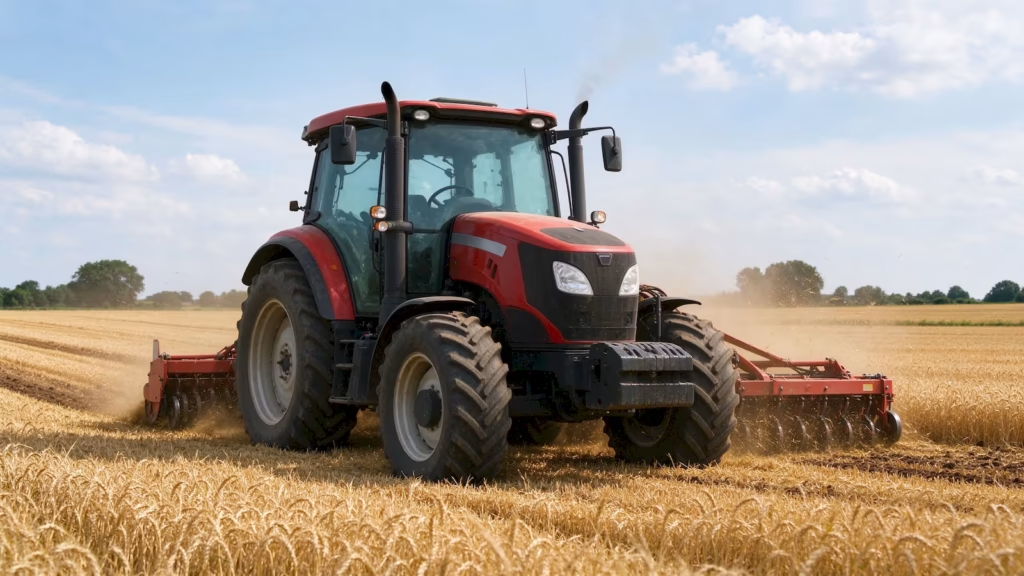
Agricultural machinery—tractors, harvesters, sprayers, and equipment—works hard under demanding conditions: high loads, constant vibration, dust, and extreme temperatures. The engine oil in these machines does more than lubricate; it must protect engines that often run for long hours at high output in dusty fields. Choosing the right engine oil for agricultural machinery means understanding the specifications the equipment requires, the operating environment, and the related fluids such as hydraulic and transmission oil. This guide explains how to choose and manage engine oil for agricultural equipment.
Know the Machines and Their Requirements
Agricultural fleets vary from small tractors to large self-propelled combines and heavy equipment, and each has its own oil requirement. Modern tractors and self-propelled harvesters commonly use heavy-duty diesel engine oil, with 15W-40 the standard grade across most climates and applications. For larger engines and hotter conditions, 20W-50 may be preferred; for colder climates, 10W-30 or 5W-30 can be specified. Many newer agricultural engines require the current API CK-4 category (with CI-4, CH-4, and CF for older engines), and European-built machines often specify ACEA E-class oils. Always follow the OEM’s recommendation in the owner’s manual—it is the single most reliable guide.
| Machine Type | Typical Engine Oil | Notes |
|---|---|---|
| Standard tractors | API CK-4/CI-4, SAE 15W-40 | Most common agricultural grade |
| Large / modern harvesters | API CK-4, 15W-40 or 20W-50 | High output, long operating hours |
| Cold-climate equipment | 10W-30 or 5W-30 | Better cold-start flow |
| Older machinery | API CF/CH-4 | May not require current categories |
The Operating Environment Shapes the Choice
Agriculture is one of the toughest environments for engine oil. Dust and soil particles are abrasive and can increase wear, so oil with strong dispersancy helps keep contaminants suspended until the filter removes them. High loads—plowing, hauling, and running PTO equipment—raise engine temperature and put stress on the oil, favoring oils with good thermal and oxidation stability. In hot climates, high-temperature grades and stable base oils matter. In cold seasons, you need an oil that flows at startup to protect the engine on the first turn of the crank. Choose a viscosity and specification that matches both the load and the climate.
Drain Intervals and Preventive Maintenance
Agricultural machines often run on seasonal schedules—intense use at planting and harvest, then long idle periods. Follow the OEM drain interval, and adjust for severe service: dusty fields, high dust loads, and heavy towing may shorten the recommended interval. Keep oil records per machine so you can track hours, and always use a filter change with the oil. Before storage seasons, consider whether the oil should be changed to protect the engine from condensation and corrosion during idle periods. A well-managed maintenance schedule extends equipment life and avoids costly failures at the worst possible time—in the middle of harvest.
Related Fluids: Hydraulic and Transmission Oil
A complete lubrication plan for agricultural machinery is not only engine oil. Tractors and combines also use hydraulic oil for the hydraulic system, and many use a multifunctional transmission/hydraulic fluid (often meeting specifications such as a tractor transmission fluid) that serves the transmission, hydraulic, and sometimes wet brakes. Some machines use a separate engine oil, while others share the fluid across systems. Check the OEM specifications carefully—using the wrong fluid can damage seals, brakes, and transmission components. Stock the correct hydraulic and transmission fluid alongside engine oil so the whole machine is protected.
Buying Considerations for Distributors and Farmers
For distributors supplying agricultural customers, the practical considerations are clear. Stock the volume grades—15W-40 heavy-duty diesel oil in the CK-4 and CI-4 categories, plus 10W-30 or 5W-30 for colder regions and the appropriate hydraulic/transmission fluid. Provide oils in sizes that suit the user: 20-liter pails for farm use and 200-liter drums for larger operations. Offer a specification-compliant product with documented quality—farmers and fleet managers want reliability, not just the lowest price, because a failure at harvest is very expensive. Build your position on the right grade, consistent quality, and good availability.
A complete agricultural lubrication plan goes beyond the engine. Tractors and combines have many moving parts that need protection: the transmission and final drive, hydraulic system, wet brakes, and dozens of grease points on linkages and bearings. Plan the full fluid and grease schedule with the OEM manual—which fluids, which grades, which intervals—so the whole machine is protected, not just the engine. Many farmers simplify by using a single high-quality engine oil and a multifunctional hydraulic/transmission fluid, but only where the OEM allows it. A coordinated lubrication plan extends the life of the entire machine, not only the engine.
For distributors serving agriculture, seasonality shapes the business. Demand for engine oil and lubricants peaks before planting and harvest, when farmers service equipment; plan your stock to have the right grades and quantities on hand before those busy windows, because a missed delivery at harvest is a lost customer. Offer practical support: help customers identify the right oil from their manual, provide bulk sizes for larger operations, and keep consistent quality so farmers trust the product. Agricultural buyers are loyal to suppliers who keep them running in the field, and they pay for reliability far more readily than for the lowest price.
Engine oil for agricultural machinery must handle high loads, dust, and long operating hours. Choose the viscosity and specification the OEM recommends—typically API CK-4 or CI-4 heavy-duty oil in 15W-40—match it to your climate, manage drain intervals and preventive maintenance, and stock the correct hydraulic and transmission fluids. When you choose and manage agricultural engine oil correctly, your machinery stays in the field when it matters.