
10W-60 is the grade most often requested by buyers who have seen it on a performance car and concluded that heavier must be safer. For a stationary generator in an Egyptian summer, that conclusion is sometimes right and often expensive. The grade is a tool, and whether it belongs in a generator depends on which engine, which load profile and which ambient the machine actually runs in.
This article is written for the wholesaler who has to answer that question for a customer, not for the customer who simply wants a heavy oil. The difference matters commercially: a wholesaler who sells 10W-60 into a fleet that should be running 15W-40 will hear about it at the first warranty claim, and the claim will be about a decision, not about a defect.
A 60-grade oil at operating temperature is extremely viscous. Its value appears where the oil runs very hot and the film must stay thick: high-revving petrol engines, some high-performance diesels, and engines with large bearing clearances working at sustained high load in high ambient. A full synthetic 10W-60 also holds its viscosity index well, so it does not thin as quickly when the sump temperature climbs.
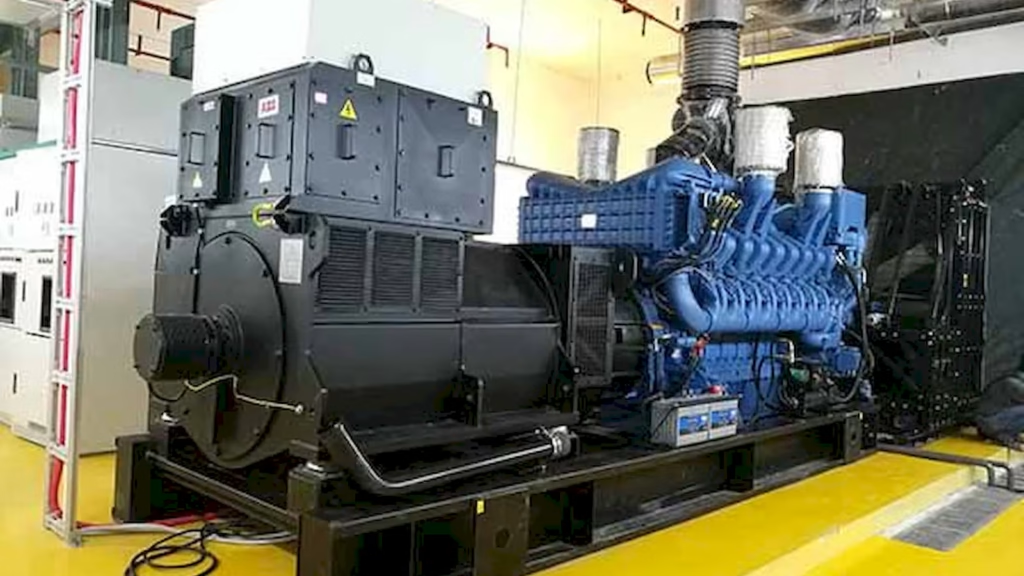
A stationary generator is a different animal. Most diesel generator sets run at a fixed speed, usually 1500 rpm for 50 Hz, at a load that is often between 30 and 80 percent of rating. The engine is a heavy-duty industrial unit with a specification written by the manufacturer, and that specification is usually a 15W-40 or a 10W-30 meeting an API CH-4, CI-4 or CK-4 category, or a gas engine oil where the set runs on natural gas. In that machine, a 60-grade oil buys film thickness the bearings do not need and pays for it in pumping loss, slower cold starts and, on some engines, higher oil temperature.
There are situations where a wholesaler can defend 10W-60 for generator duty, and they are specific rather than general.
- Very high ambient with a set running near continuous rated load, where measured oil temperature stays high and oil analysis shows viscosity dropping below the grade band.
- Older industrial engines with wide bearing clearances and a history of low oil pressure at temperature, where the OEM guidance permits a heavier grade.
- Engines operating on fuel or conditions that accelerate oxidation, where the synthetic base oil is the real benefit and the 60 grade is a side effect of the product chosen.
- Customer fleets that already standardise on the grade across several machine types, where one oil reduces the risk of a misfill more than it costs in efficiency.
Everything else is a case for the OEM specification. A warranty is a contract about a grade, and a wholesaler who recommends outside it owns the consequence. In markets where generator sets are often imported second-hand, the manual may be missing or in another language, which is exactly when a written specification request to the OEM or its local dealer is worth the wait.
| Generator situation | Sensible grade | Reason | What to watch |
|---|---|---|---|
| New diesel set under warranty, OEM specifies 15W-40 | 15W-40, API category per OEM | Warranty and design intent | Do not substitute a heavier grade without written approval |
| Older set, low oil pressure when hot, OEM permits heavier oil | 15W-50 or 10W-60 full synthetic | Film thickness at high temperature | Oil temperature, fuel consumption, cold start |
| Continuous rated load, 45 degrees ambient, oil analysis shows thinning | 10W-60 full synthetic | Viscosity retention under sustained heat | Oil sampling every drain, not once a year |
| Standby set, few hundred hours a year | 15W-40 or 10W-30 per OEM | Short running hours do not justify a premium grade | Exercise runs, condensation, fuel quality |
| Gas engine set | Gas engine oil specified by the OEM | Different fuel, different ash and oxidation requirements | Do not use a diesel grade, whatever its viscosity |
| Mixed fleet with no records | 15W-40, documented and consistent | Predictability beats optimisation without data | Build a machine register before changing grades |
Egypt rewards wholesalers who treat import compliance as part of the product. Importing for trade requires registration in the importers register under Law No. 121 of 1982, which is valid for five years, and goods covered by the relevant resolutions need GOEIC registration filed by the importer or the commercial agent, listing the brands and product families. Products on the pre-shipment inspection list need an inspection certificate issued before shipment, and conformity with the relevant Egyptian standard can be certified through EOS for a specific quantity.
For a wholesaler the practical consequences are about timing and labels. Registration belongs before the first order, not during clearance. Arabic labelling and the standard reference should be agreed with the clearing agent before artwork is printed. And the product family has to be described consistently across the registration, the label and the safety data sheet, because a mismatch between them is what turns a routine clearance into a two-week negotiation.
The wholesale structure itself usually settles around drums for the volume accounts, pails for workshops and small generators, and private label for the wholesaler who wants to build a name rather than distribute somebody else’s. Each format carries its own minimum order and its own document set, and mixing them in one container is where the freight economics work or fail.
10W-60 full synthetic costs more per litre than a 15W-40, and the gap is not only base oil. The additive package, the viscosity index improver and the oxidation requirement all add cost, and a wholesaler who sells it as a premium without explaining what the premium buys will lose the account to a cheaper product the moment a procurement officer compares invoices.
The defensible pitch is narrow and technical: this grade holds film thickness and viscosity at temperatures where the standard grade thins, and it is worth the difference only in machines where that behaviour is measured. For a standby generator running a few hundred hours a year, the honest answer is that the standard grade is correct and the premium is wasted. Saying so keeps the customer for the next five orders.
If-then: if the generator is under warranty and the manual specifies 15W-40, then 15W-40 is the correct product and a 10W-60 offer should be declined regardless of margin. If the set is older, running near continuous rated load in extreme ambient, and oil analysis shows the standard grade thinning below its band, then a 10W-60 full synthetic is defensible and should be introduced with a sampling plan. If the wholesaler cannot produce the OEM specification for the machine, then the grade decision is not yet a decision, it is a guess with a warranty attached.
- The OEM specification for each generator family in the customer’s fleet, in writing.
- The grade and API category the wholesaler will supply, and the conditions under which a different grade is recommended.
- The documentation set: batch COA, safety data sheet with the Arabic label reference, certificate of origin, inspection certificate where required.
- The packaging mix and the minimum order per SKU, agreed before the container is booked.
- The oil sampling schedule and who pays for the analysis.
- The claim process and the window in which the supplier answers a technical question.
- The label ownership if the product is sold under the wholesaler’s brand.
The generator range is covered in engine oil for generators, the standby case in engine oil for backup generators, and the small-set case in engine oil for small generators. Private label economics are set out in wholesale private label engine oil.
Wholesaling generator oil into Egypt and need the grade matched to the machine rather than to the price list, with registration, labels and documents that clear? Send the generator models, the load profile and the annual volume, and we will build the range and the paperwork around the actual machines.
Is 10W-60 suitable for all diesel generators?
No. Most stationary diesel generator sets are specified around a 15W-40 or 10W-30 grade meeting a defined API category, and a 60-grade oil is outside that intent. It becomes defensible where the OEM permits it and where measured oil temperature and analysis justify the heavier film.
Does a heavier grade protect better in hot climates?
It protects the film better at high temperature, and it costs pumping energy and cold-start performance. Whether that trade is worth it depends on the machine and on measurement, which is why oil sampling settles the question better than a rule of thumb.
Can a 10W-60 be used in a gas generator set?
Not as a substitute for a gas engine oil. Gas engines have different ash, oxidation and nitration requirements, and the specification comes from the OEM rather than from the viscosity grade.
What registration does an Egyptian wholesaler need?
Registration in the importers register under Law No. 121 of 1982, GOEIC registration where the product family is covered, pre-shipment inspection for listed goods, and EOS conformity work where the standard requires it. The clearing agent should confirm the current requirements for the exact product.
How should the grade be introduced to an existing fleet?
With a written OEM specification check, a first drain analysed for viscosity, oxidation and wear metals, and an interval set from the trend. Changing a grade without a baseline turns a technical decision into a dispute later.