
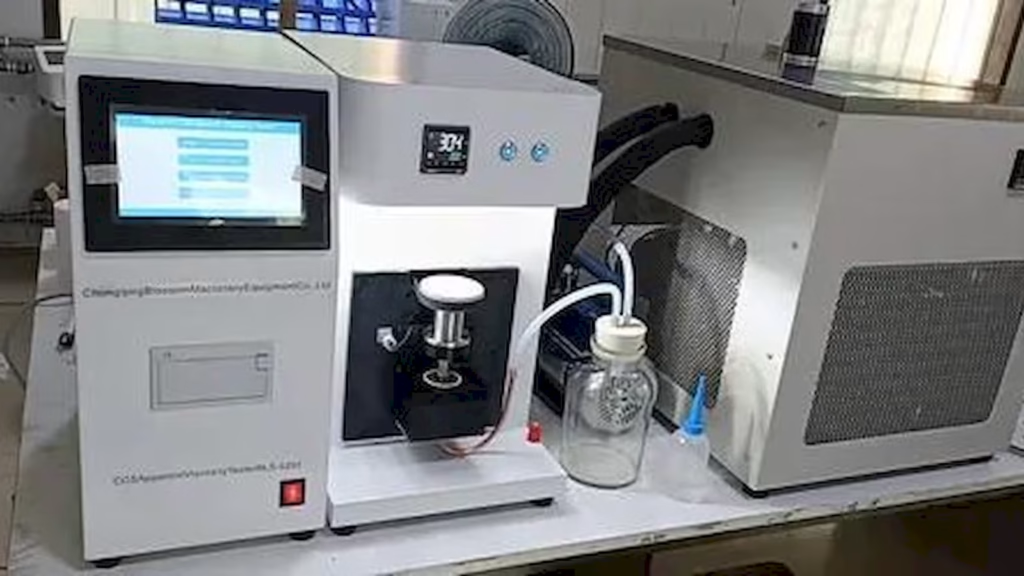
Oxidation stability determines how long an engine oil resists chemical breakdown at high temperature before it thickens, forms sludge and varnish, and damages the engine. For international buyers—importers, distributors, and fleets—it affects product performance, drain intervals, and whether a batch is what the supplier claims.
Why Oxidation Stability Matters to a Buyer
When you import engine oil, you are buying performance you cannot always see at the point of sale. Oxidation stability is one of the qualities that determines whether the oil protects the engine for its full drain life or degrades early.
- A stable oil stays in grade, keeps its viscosity, and resists sludge and varnish.
- An unstable one thickens, becomes acidic, and shortens both drain intervals and engine life.
- For a fleet or a distributor reselling the oil, this shows up directly in operating cost and customer complaints.
Evaluating oxidation stability is a core part of buying quality, not a technical afterthought.
The Tests and Numbers to Look For
Oxidation stability is measured with standardized tests reported on the technical data sheet or certificate of analysis:
| Parameter | What It Tells a Buyer | A Strong Sign |
|---|---|---|
| RPVOT (ASTM D2272) | How long the oil resists oxidation under pressure | Longer minutes = better stability |
| TBN (ASTM D2896 / D4739) | Reserve alkalinity to neutralize acids | Higher fresh TBN = more reserve |
| Viscosity growth after test | How much the oil thickens when oxidized | Smaller % increase = more stable |
| Base oil group (I / II / III / synthetic) | Natural oxidation resistance | Group II/III & synthetics are more stable |
Know which test a supplier is reporting and compare like for like within the same base-oil type.
The Certificate of Analysis Is Your Evidence
For an international buyer, the COA is the document that turns a claim about oxidation stability into evidence. Follow this check:
- Ask for the COA and check the oxidation-related values: TBN, viscosity after oxidation, and the oxidation test result if reported.
- Verify the COA corresponds to the specific batch you are buying, not a different production run.
- Treat a missing COA as a warning sign, and ask a supplier who omits oxidation data to provide it.
As a wholesale engine oil manufacturer and exporter, we supply oxidation-stable grades documented with a full certificate-of-analysis for every batch — request a quote or COA samples from our export team.
Base Oil and Additives Determine Stability
Oxidation stability is set by the base oil and the additive package:
- Highly refined base oils—Group II, Group III, and synthetics such as PAO and esters—are naturally more oxidation-resistant than conventional Group I mineral oil.
- The antioxidant system, typically aminic and phenolic antioxidants plus ZDDP for wear, extends stability further.
Two oils at the same nominal specification can differ significantly in real stability depending on the base oil. Ask which base oil group a product uses, and price the value accordingly.
Batch-to-Batch Consistency Across Suppliers
International buyers buy repeatedly, and oxidation stability is a key consistency check across batches and suppliers:
- Keep a retention sample of every batch.
- Compare its oxidation-related values to the COA.
- Re-test if you notice the oil darkening, thickening, or performing differently.
Matching Stability to Your Market and Duty Cycle
The level of stability you need depends on how the oil is used in your market:
- Long-drain commercial fleets and heavy-duty equipment in hot climates need high stability.
- In a market of standard passenger-car drain intervals, moderate stability is usually enough.
Match the stability you buy to the duty cycle you serve: don’t overpay for extreme stability you don’t need, but never accept low stability where the oil must work hard for a long time.
Oxidation stability also affects how you position the product locally. In a quality-recognizing market, an oil with strong stability and a full COA can sell as premium; in a value-driven market, a stable, economical Group II-based grade competes on price while still protecting the engine. Understanding stability lets you position correctly.
Oxidation stability is one of the most important quality measures for an international buyer. Understand the tests—RPVOT, TBN, and viscosity growth—read the COA for the specific batch, consider base oil and additive chemistry, and check consistency across shipments. Match stability to your market’s duty cycle.
FAQ
What is the RPVOT test?
The rotary pressure vessel oxidation test (ASTM D2272) measures how long the oil resists oxidation under oxygen pressure at high temperature. Higher minutes indicate better oxidation stability.
Why is a COA important for imported oil?
The COA turns a performance claim into evidence: it shows the test method, result, and limit for the specific batch. It lets you verify a batch is what the supplier says before you buy.
What TBN should I look for?
For heavy-duty diesel oils, a fresh TBN around 10 to 12 or higher indicates strong acid-neutralizing reserve. For passenger-car oils the number is often lower. Compare within the same application and specification.