
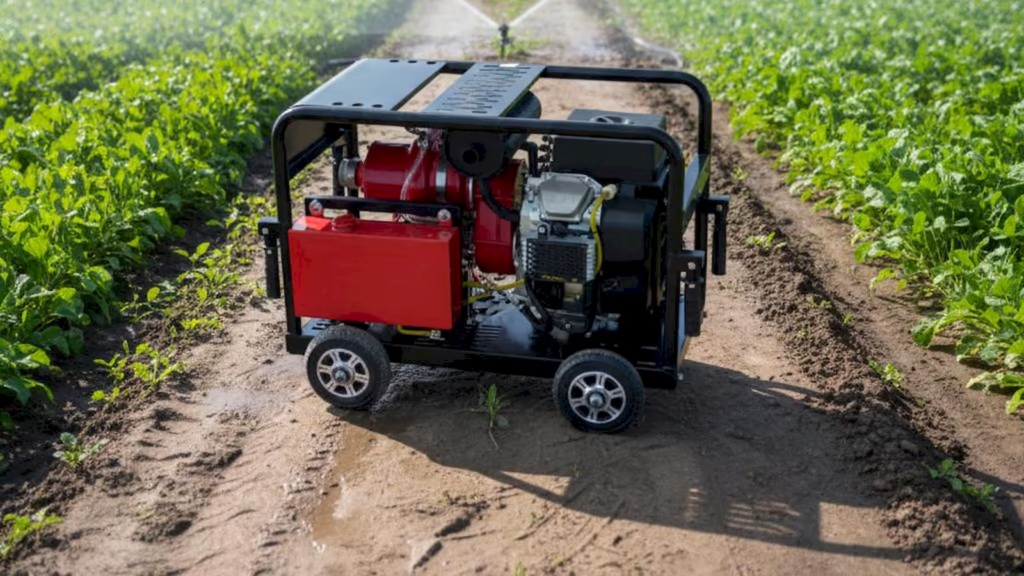
Water pumps are everywhere—irrigation, drainage, municipal water supply, construction dewatering, and domestic use—and many are driven by small engines. Choosing the right engine oil for that engine is what keeps the pump running and the water flowing.
First, Distinguish Engine Oil from Bearing Grease
A common point of confusion is that ‘water pump oil’ can mean two different things:
- The small engines that drive irrigation, drainage, and dewatering pumps need engine oil, exactly like a car or generator engine.
- The water pump itself is a separate component: its shaft and bearings are usually lubricated with grease, not engine oil.
Never pour engine oil into a bearing grease point, and never treat the pump and engine as one lubrication system.
Know the Engine and Its Oil
The small engines that drive water pumps are typically air-cooled single-cylinder or multi-cylinder gasoline engines, or small diesel engines. Each specifies an oil grade in the owner’s manual:
| Engine Type | Typical Oil Grades | Notes |
|---|---|---|
| Small air-cooled gasoline pump engine | SAE 30, or 10W-30 / 10W-40 multigrade | Warm-climate standard; multigrade for varying temps |
| Small diesel pump engine | 10W-30 / 10W-40 / 15W-40 | Match to climate and OEM |
| High-mileage / heavy pump engines | 20W-50 (hot climates, heavy duty) | Where the OEM allows |
Always follow the OEM specification rather than guessing. The manual is the single most reliable guide.
For distributors and pump users, we supply quality engine oil for small engines and water-pump power units at wholesale prices — contact our sales team for grades, packaging, and pricing.
Severe Service Demands Better Oil
A water pump engine works under conditions that stress the oil. Irrigation pumps often run continuously for long hours at high load, which raises oil temperature; pumps on farms and construction sites operate in dusty environments.
- Oil with strong dispersancy keeps dust and contaminants suspended until the filter removes them.
- High loads favor oil with good thermal and oxidation stability.
- Pumps that run seasonally then sit idle need oil that resists oxidation and corrosion.
Even a small engine benefits from a quality oil with good detergency and stability, rather than the cheapest option. In hot climates, a robust high-temperature grade protects the engine at operating temperature.
Check the Oil Regularly and Follow Intervals
Maintaining a pump engine is straightforward but essential. Follow this routine:
- Check the oil level before each run and keep it at the correct level.
- Change the oil and filter (if fitted) at the interval the manufacturer specifies—often based on hours, not just time.
- In dusty, heavy-duty service, shorten the interval.
- For engines idle for long periods, change the oil before storage to protect against condensation and corrosion.
Choosing Oil for Distributors and Buyers
For a distributor or buyer, the practical choice is to stock the grades the local pump population needs:
- The volume seller is typically a quality SAE 30 or 10W-30/10W-40 oil for small gasoline engines.
- For small diesel pump engines in hot climates, stock 15W-40.
- Provide convenient sizes—1-liter bottles for single engines and pails for workshops and farms.
Municipal and construction dewatering pumps often use larger diesel engines, which may specify 15W-40 heavy-duty diesel oil meeting API CI-4 or CK-4. Confirm the specification against the engine manufacturer’s requirement, because a large pump engine working continuously deserves the same protection as a truck or generator.
A common mistake is neglecting the air filter and fuel system—a dirty air filter lets dust into the engine and accelerates oil contamination. Pair good oil with good basic maintenance for a long, reliable pump life.
Choosing engine oil for water pumps means choosing the right oil for the small engine that drives the pump, and keeping the pump’s bearings greased separately. Match the grade to the engine and climate, use oil with good detergency and stability, and follow the oil-change interval.
FAQ
Is engine oil the same as pump grease?
No. The small engine that drives a pump needs engine oil; the pump’s shaft and bearings are lubricated with grease the pump manufacturer specifies. Never pour engine oil into a bearing grease point.
What oil should I use in a small gasoline pump engine?
For a small air-cooled gasoline engine, SAE 30 is common in warm conditions, while 10W-30 or 10W-40 multigrade suits varying temperatures. Always follow the owner’s manual.
How often should I change pump engine oil?
Follow the manufacturer’s interval, which is often based on operating hours. In dusty, heavy-duty service, shorten the interval, and change the oil before long idle storage.