
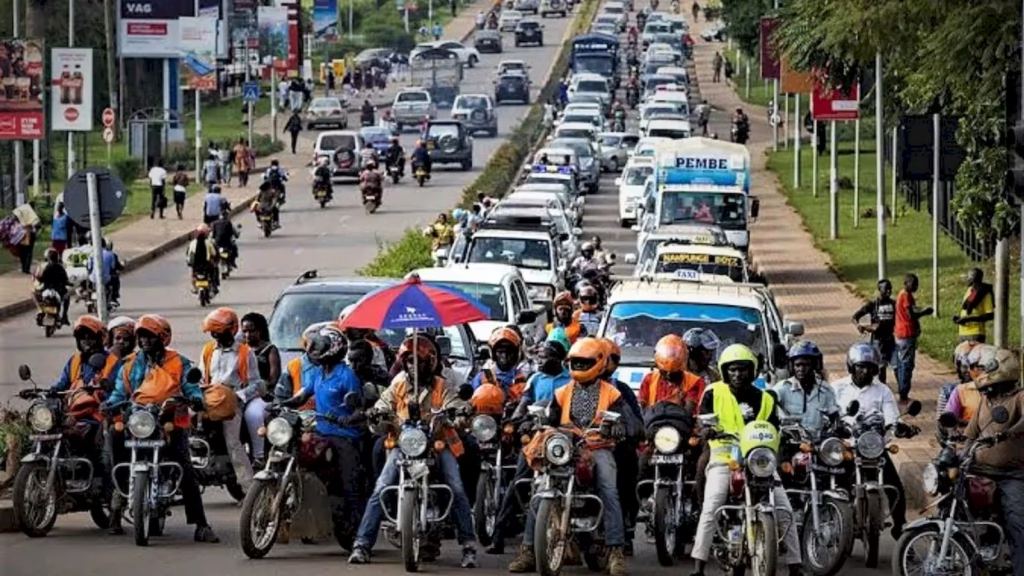
Rwanda is a small, landlocked market of roughly 14 million people, and that size shapes everything about engine oil distribution there. Volumes are modest, logistics are long, and the import route runs through a neighbouring country’s port. At the same time the market is organised, urbanising and growing, with a dense motorcycle taxi economy and a construction sector that consumes lubricant every day. The opportunity is real, but it rewards disciplined supply rather than large speculative stock.
Distributors who treat Rwanda as a small version of a larger African market usually over-order, over-extend credit and then discount to recover cash. Distributors who treat it as its own market — narrow range, fast turns, strong relationships with workshops and fleets — find a business that is smaller but more predictable. This guide maps the demand, the import route and the channel choices.
| Segment | What drives demand | Oil type | Entry angle |
|---|---|---|---|
| Motorcycle taxis (moto) | Dense urban transport, high mileage | 4T motorcycle oil, JASO MA2 | Small packs, frequent repeat purchases |
| Minibuses and coaches | Public transport between towns | 15W-40 or 10W-40 diesel | Fleet contracts and workshop supply |
| Construction | Roads, housing, commercial builds | 15W-40 API CK-4 | Project-linked supply and equipment dealers |
| Agriculture | Tea, coffee, maize and livestock | 15W-40 or 10W-30 | Seasonal orders through cooperatives |
| Passenger cars | Growing middle class, used imports | 5W-30 and 5W-40 | Workshops, petrol stations and retail |
Channel economics are covered in retail, wholesale or fleet supply, the build-out plan in how to build an engine oil distribution business, and the supplier questions in what African buyers should ask Chinese suppliers.
Rwanda’s three distribution models behave very differently. Retail needs many SKUs, shop or workshop relationships and working capital for credit. Wholesale needs storage and a dealer network, and earns a thinner margin on larger volume. Fleet supply needs fewer SKUs but a service capability and a contract discipline. Trying to do all three at once with limited capital is the most common failure.
| Channel | Capital needed | Margin shape | Best when |
|---|---|---|---|
| Retail | High: many SKUs, credit, shop space | Higher per litre, slower turn | You already have workshops or stations |
| Wholesale | Medium: warehouse and dealer credit | Thinner, volume-driven | You can serve a dealer network |
| Fleet supply | Lower SKU count, contract terms | Contract margin, predictable | You can service fleets and workshops |
If-then: if your capital is limited, then start with motorcycle oil and one fleet contract, which turn faster than a full retail range. If you already operate workshops, then retail is the natural channel and the range should follow what those workshops ask for.
Rwanda has no seaport. Containers arrive through Mombasa in Kenya or Dar es Salaam in Tanzania and move by road to Kigali, which adds transit time, transit-country charges and a real risk of delay at the border. The landed cost therefore includes more than freight: clearing agents, transit bonds, border dwell and inland haul all sit between the FOB price and the warehouse.
| Element | Typical | Buyer note |
|---|---|---|
| Port | Mombasa or Dar es Salaam | Compare total corridor cost, not just ocean freight |
| Inland transit | Several days by road | Add buffer for border dwell |
| Standards | EAC and Rwanda Standards Board requirements | Confirm labelling and marking before production |
| Currency | Rwandan franc, stock priced in USD | Plan for exchange-rate movement |
| Storage | Kigali warehouse | Covered, cool, FIFO by batch date |
In markets where lubricant demand is growing faster than formal distribution, counterfeit and refilled packs appear. A distributor competing on price alone invites that comparison. A distributor competing on traceability makes counterfeiting expensive: sealed packs, batch codes that can be checked, and a paper trail from factory to shelf.
- Use tamper-evident closures and a batch code on every pack.
- Keep a register linking each batch code to its CoA and delivery.
- Sign written distribution agreements with sub-dealers.
- Offer a verification channel that a customer can actually use.
- Test suspicious stock rather than arguing about it.
Small markets punish overstocking harder than large ones because the stock cannot be moved to another region quickly. The safer path is to start narrow, prove the turn rate, and add grades only when a segment asks for them.
- Start with motorcycle oil in the pack sizes the moto sector already buys.
- Add one diesel grade for minibuses and construction, not three.
- Secure one fleet or workshop contract before expanding the range.
- Track sell-through monthly and reorder on measured demand.
- Add passenger-car grades only after workshops begin to request them.
- Review the range every quarter and drop grades that do not turn.
If-then: if a grade has not sold through in 90 days in a small market, then it is the wrong grade or the wrong pack, and more stock will not fix it. If a segment keeps asking for a grade you do not carry, then add it as a trial order before making it a permanent line.
Is Rwanda a good market for engine oil distribution?
It is a small but organised and growing market. The opportunity is in disciplined supply to motorcycles, fleets and construction rather than in large speculative volumes.
How does engine oil reach Rwanda?
By container to Mombasa or Dar es Salaam, then by road to Kigali, with transit bonds, clearing agents and border dwell added to the landed cost.
Which product should a new distributor start with?
Motorcycle oil in small packs, because the moto taxi sector turns stock quickly and repeat purchases are frequent. Add diesel grades once a fleet or workshop contract is secured.
What standards apply to lubricants in Rwanda?
East African Community standards and Rwanda Standards Board requirements apply. Confirm labelling and marking requirements before production, not after arrival.
How do I protect a brand against counterfeit oil?
Tamper-evident packs, batch codes linked to a CoA, written dealer agreements and a verification channel customers can use.
Entering the Rwandan engine oil market and want a narrow range that turns fast instead of a container that sits? Send us your target segment and volume — we will structure the product mix, the pack sizes and the corridor landed cost to Kigali.