
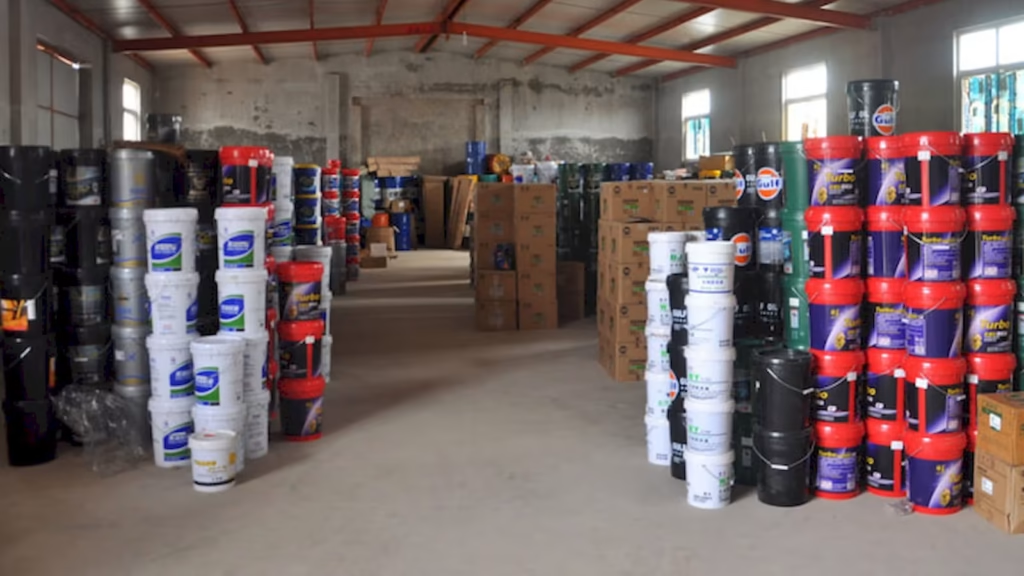
Engine oil distribution is a steady, recurring-revenue business: vehicles and equipment need oil forever. But it is not a simple resale—success depends on choosing the right segments, sourcing consistent quality, and building trust with workshops and fleets. This guide lays out the practical path.
Step 1: Choose Your Segments
Distribution is easier when you focus. Pick one or two segments and learn them deeply:
- Automotive retail: passenger-car and motorcycle oil through workshops and stores.
- Fleet & commercial: trucks, buses, and logistics operators buying in bulk.
- Industrial & off-road: construction, mining, agriculture, generators.
- Import/export: supplying dealers in neighboring regions.
Trying to serve everyone dilutes your value. A distributor who understands one segment’s specs, seasonality, and price sensitivity wins that segment.
Step 2: Source Reliable Supply
Your product is your reputation. Vet suppliers on:
| Check | What to Look For |
|---|---|
| Certifications | API license, ACEA conformance, COA per batch |
| Base oil | Group II/III base oils and clear additive chemistry |
| Packaging | Secure drums/pails/bottles, private label options |
| Consistency | Compare two recent batch COAs |
We work with distributors on private-label and branded engine oil supply, with COA per batch and technical support — talk to our distribution team about becoming a partner.
Step 3: Price for Recurring Revenue
Oil distribution margins are built on repeat orders, not one-off deals:
- Set landed cost + margin, accounting for duty, freight, and warehousing.
- Offer volume tiers for fleet buyers to lock in recurring orders.
- Protect margin by not competing on the cheapest unbranded oil—compete on quality and service.
The cheapest product always creates the most warranty headaches. Price for quality you can stand behind.
Step 4: Build Channels and Trust
- Sign anchor workshops or fleets first; their repeat orders fund growth.
- Train your resellers on oil grades, specs, and proper change intervals.
- Provide clear labeling, MSDS, and technical support.
- Manage claims quickly—one unresolved engine claim damages many relationships.
Step 5: Manage Inventory and Claims
- Rotate stock first-in-first-out; oil degrades in storage.
- Keep safety stock of fast-moving grades (15W-40, 5W-30, motorcycle oil).
- Document every batch and supplier, so any claim can be traced.
Building an engine oil distribution business is about focus, reliable supply, fair pricing, and trust. Pick a segment, source documented quality, build recurring fleet and workshop accounts, and manage claims and inventory rigorously.
FAQ
How much capital do I need to start distributing oil?
It depends on segment and packaging. Start small with fast-moving grades and anchor customers; capital is mostly inventory, packaging, and warehousing.
Can I do private label?
Yes. Many manufacturers offer private-label engine oil. Confirm API licensing, COA per batch, and packaging minimums before committing.
How do I handle warranty claims?
Trace the batch number back to the supplier’s COA, document the customer’s complaint, and respond quickly. Good suppliers stand behind their product.