
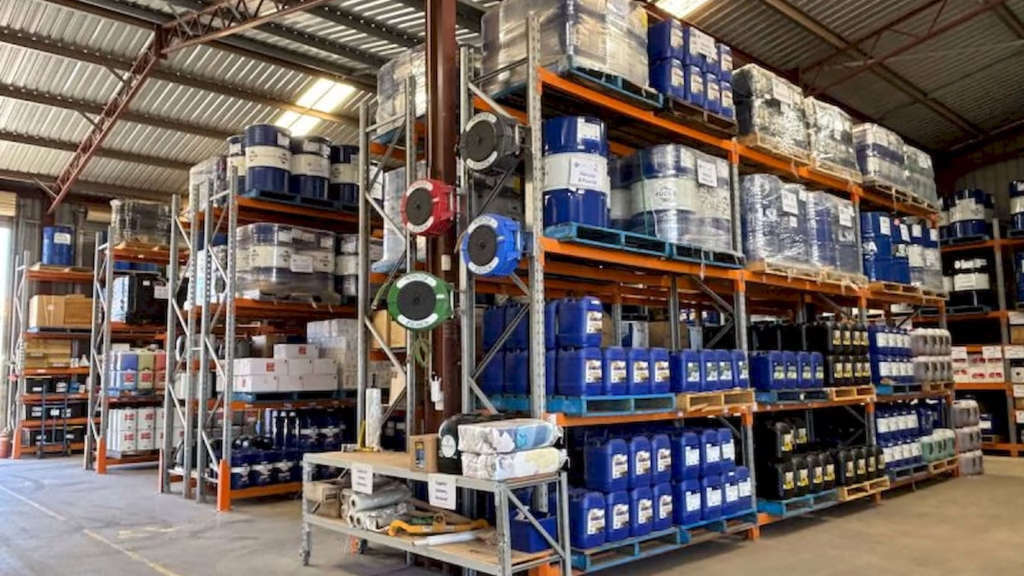
Finding a private-label engine oil supplier is easy — finding a reliable one is the job. A private-label brand lives or dies on the oil inside the bottle you put your name on: if the viscosity drifts, the additive package is inconsistent, or the factory cannot print your label cleanly, the brand takes the damage even though the formula was made elsewhere. This guide gives you a repeatable vetting process, from the first quote to the first full batch, so you can separate a real manufacturing partner from a trading desk that simply resells someone else’s oil.
Private label means you own the brand, the specification and the market, and the factory manufactures the oil and packages it under your name. The supplier is therefore not just a price point — they are your quality control, your consistency engine and, when things go wrong, your first line of accountability. That is why the vetting process has to be structural, not impression-based.
A genuine lubricant factory blends base oils and additives, controls its own QC lab, and can issue batch certificates under its own name. A trading desk buys finished oil from a factory and resells it with your label, sometimes without telling you who actually blended it. Both can deliver — but the risk profile is completely different. A factory gives you formula control and batch traceability; a reseller adds a middle layer and a documentation gap you may only discover when a batch fails.
| Supplier type | What they control | Risk profile | Best for |
|---|---|---|---|
| Full factory | Base oil, additives, blending, QC lab | Low — full traceability | Long-term brand owners |
| Factory with toll blending | Blending under your formula spec | Medium — confirm QC ownership | Brands with a formula |
| Trading desk / reseller | Purchasing and logistics only | Higher — documentation gap | Fast small orders only |
Before you negotiate price, confirm the business model. If you are building a brand long term, the private-label build process should start with a factory that can show you its blending line and its lab, not just its sales office.
- Licences: API licence number, ISO 9001, and any market-specific registration you need.
- Formula documentation: base oil type, additive package, and the target spec (API/ACEA/JASO).
- Lab capability: does the factory run its own QC, or outsource it?
- Batch traceability: can they issue a CoA for every batch under your label?
- Label capability: can they print your private label in the correct language and design?
- Production scale: does their line match your order size without long, unstable lead times?
If the volume justifies it, a live factory audit is worth far more than a phone call. On site you want to see the blending tanks, the additive dosing system, the QC lab with its instruments, and the filling line. A factory that blends by batch recipe with recorded dosing is more consistent than one that mixes by instinct. Ask to see the last three batch CoAs and the retained samples for the same formula.
If-then: if you cannot visit in person, then ask for a live video walkthrough of the blending line, the lab and the warehouse — a real factory can show you all three in real time. If the request is refused or deflected with stock photos, treat it as a red flag.
Your private label is only as good as the specification you specify. You should define the API/ACEA category, the viscosity grade, the base oil type and the additive package, and you should own a copy of the formula approval so you are not dependent on one factory’s undocumented blend. This is the difference between buying a product and owning a product spec.
Decide the spec before you shop: whether it is a wholesale OEM oil arrangement or a fully owned formula, the grade and service category drive everything downstream, including packaging and pricing.
Never commit to a full batch on a quote alone. Order a sample batch, run an independent lab test against your target spec, and store a retained sample of the accepted batch. Viscosity at 40°C and 100°C, TBN, flash point and pour point are the minimum checks. If the sample matches spec, then scale the order; if it drifts, the supplier’s QC is not reliable.
| Check | What it verifies | Test method |
|---|---|---|
| Kinematic viscosity @40°C / 100°C | Grade accuracy (e.g. SAE 40) | ASTM D445 |
| TBN | Alkalinity reserve | ASTM D2896 |
| Flash point | Safety and formulation | ASTM D92 |
| Pour point | Cold-flow behaviour | ASTM D97 |
- Put the specification, TBN, viscosity and additive package in the contract, not just in an email.
- Define batch CoA requirements: every batch ships with a certificate you can audit.
- Agree on retained-sample handling: who keeps a sample, for how long, and how disputes are tested.
- Set incoterms and payment terms that protect you on the first large order (deposit + balance on inspection).
- Include a change-notification clause: the factory must tell you before any formula change.
If-then: if the supplier is unwilling to put the spec in the contract or refuses retained samples, then walk away — these two clauses are the minimum a real partner accepts. If they agree, then you have a basis for a long-term relationship rather than a one-off price deal.
How do I know if a private-label supplier is a factory or a reseller?
Ask for a live video walkthrough of the blending line and QC lab, and request batch CoAs under the factory’s own name. A factory can show you production; a reseller usually cannot.
What tests should I run on a sample?
At minimum viscosity at 40°C and 100°C, TBN, flash point and pour point. Compare every result against the spec you defined before ordering.
Should I define the formula myself?
Yes, own the spec. Define the API/ACEA category, viscosity grade, base oil type and additive package so you are not tied to one undocumented blend.
What payment terms protect a first-time buyer?
A deposit with the balance payable after batch inspection gives you leverage. Avoid paying the full amount on proforma before seeing the batch CoA and test results.
How long should retained samples be kept?
Keep a sealed retained sample for at least one full service cycle of the target engine, or a fixed period such as 12 months, so a later dispute can be tested against a reference.
Building a private-label engine oil brand and want a factory you can actually audit? Send us your target spec and volume — we will share the vetting checklist, sample protocol and a supplier you can verify before you commit.