
Why Marine Diesels Differ
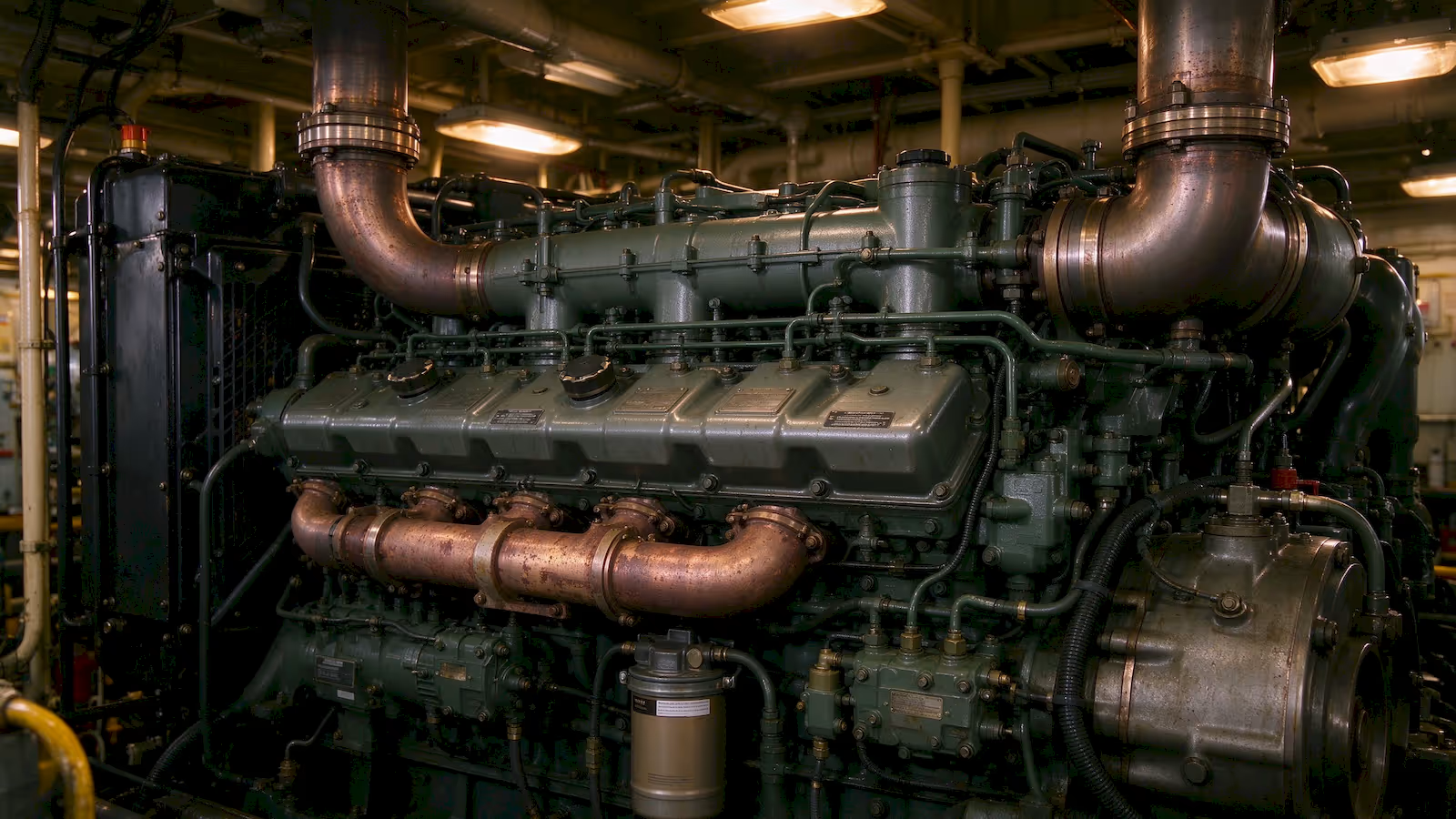
Marine diesel engines operate in a world very different from road engines. They run continuously for long periods, often at constant load, in an environment with high heat and salt-laden air. Some burn fuels with high sulfur content, which creates acidic combustion products that can corrode the engine. The engine oil for marine diesels must therefore protect under sustained heavy duty, neutralize acids, and resist contamination. Understanding the common requirements helps buyers select oil that keeps marine engines reliable.
Whether the engine is a small auxiliary marine unit or a large main propulsion engine, the core needs are the same: strong protection under continuous load and the ability to handle the fuel being burned.
Viscosity Requirements
Marine diesel engine oil is commonly available in a range of viscosities, with SAE 15W-40 being a standard choice for many medium-speed marine engines, and SAE 30 or 40 single-grade oils used in some engines or climates. The right viscosity depends on the engine type, operating temperature, and manufacturer’s recommendation. Because marine engines often run at constant high load, the oil needs strong film strength and shear stability. Buyers should follow the engine maker’s specification and match the viscosity to the operating conditions, rather than choosing by habit.
High Alkalinity for Fuel Quality
One of the most important properties of marine engine oil is its alkalinity, measured as TBN. Marine diesel engines often burn fuels with higher sulfur content, which forms acids during combustion. The oil must have enough alkalinity to neutralize these acids and prevent corrosion of the cylinder liners and bearings. High-TBN marine oils are formulated for this. Choosing an oil with the right TBN for the fuel being used is critical—too low and the engine corrodes, too high and it can cause deposit issues. This is a marine-specific requirement buyers must understand.

Specifications and Additives
Marine engine oils are formulated with additives for acid neutralization, deposit control, and protection against wear, rust, and foaming. Many meet specific marine specifications set by engine makers or international standards. Some marine diesels, especially larger or older engines, use high-alkalinity oil designed for high-sulfur fuel, while newer engines burning cleaner fuel need a different formulation. Buyers should match the oil to the engine’s specification and the fuel it burns, and ask the supplier for the technical data that confirms the product meets the requirement.
Drain Intervals and Oil Analysis
Marine engines often run with oil analysis programs that monitor TBN, viscosity, wear metals, and contamination. Because marine oils neutralize acid, their TBN depletes over time, and analysis tells you when it has dropped too far to protect the engine. Water and fuel contamination are also risks on boats. Regular oil analysis lets operators change oil at the right time, extending oil life safely while protecting the engine. A supplier who supports oil analysis adds real value for marine operators.
Buying Considerations
When buying engine oil for marine diesel engines, confirm the viscosity, the TBN requirement based on your fuel, and the engine maker’s specification. Ask for the certificate of analysis and technical data. Choose a supplier who understands marine applications and can supply consistently, because a vessel cannot easily switch suppliers at sea. Stock the right grades for the engines and fuel you use, and keep enough on hand for the operating schedule. For marine buyers, matching the oil to the fuel and engine is the difference between reliable operation and expensive damage.
Choose Marine Oil That Protects Under Load
Marine diesel engines need oil that handles continuous heavy duty and the acids from high-sulfur fuel. Choose the right viscosity, ensure the TBN matches your fuel, and follow the engine specification. Monitor the oil with analysis and buy from a supplier who understands marine needs. When the oil meets these common requirements, marine engines run reliably and last longer.