
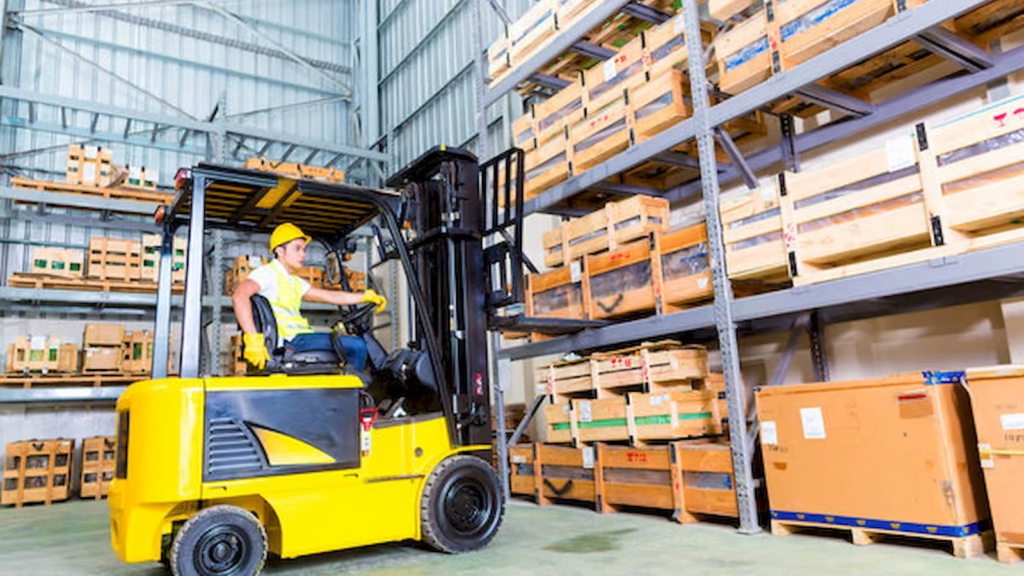
A forklift looks like a small truck and is bought like one, which is where most supply mistakes begin. It works a short duty cycle at high load, often indoors, often at walking pace, with a hydraulic system that runs hotter than the engine and a transmission that is expected to start and stop a loaded machine a thousand times a shift. A distributor who supplies material handling equipment with a truck oil assortment will keep the account for a season and lose it at the first hydraulic failure.
The category is also broader than forklifts. It includes reach stackers and empty container handlers in ports, terminal tractors, order pickers, pallet trucks and the scissor lifts and telehandlers used in construction and warehousing. Each has its own mix, but they share a structure: an engine, a hydraulic circuit, a transmission with a wet brake or clutch in many designs, and a set of greased joints. Four product families, four different failure modes.
| Fluid | Where it goes | Specification to quote | What fails when it is wrong |
|---|---|---|---|
| Engine oil | LPG, diesel or dual-fuel engines | API CJ-4 or CK-4 for diesel; for LPG, the OEM specification and an ash level the builder accepts | Valve wear on LPG units, deposits and stuck rings on low-ash oils used without approval |
| Hydraulic oil | Mast, steering, attachment circuits | ISO 11158 HM or HV, ISO VG 32, 46 or 68 depending on climate and duty | Slow response, overheating, pump wear, seal hardening |
| Transmission and wet brake oil | Torque converter, gearbox, wet brake packs | The OEM transmission specification, often a UTTO or a dedicated powershift fluid | Brake chatter, clutch slip, shortened brake life |
| Grease | Mast channels, wheel hubs, steering joints, load chains | NLGI 2, EP, with the water resistance the wash-down regime requires | Chain wear, mast binding, water washout in food and cold-store sites |
Diesel forklifts are the simpler case. A modern unit with aftertreatment needs a low-ash category and an OEM approval, and an older mechanical unit is usually happy with a CJ-4 or CI-4 product. The importer’s decision is mostly about how much of the fleet is old, because a low-ash oil in an old engine with wide clearances gives up some valve and cam protection, while a high-ash oil in a new aftertreatment-equipped engine shortens the filter’s life.
LPG units are where distributors get caught. LPG burns hotter and cleaner than diesel in some respects and hotter and drier in others, and the engines are often derived from automotive designs with hydraulic lifters and hardened valve seats. Ash level matters here for the opposite reason: too low and valve wear accelerates, too high and deposits form on plugs and in the combustion chamber. The only defensible answer is the OEM specification for that engine family, and if the supplier cannot produce it, that is the answer.
Hydraulic oil is usually described by ISO viscosity grade and by performance class. ISO VG 32, 46 and 68 are the three common warehouse grades, and the choice is not a matter of taste: it follows ambient temperature, the pump type and how hot the circuit runs. A cold-store operation at minus 25 degrees and a steel mill handling hot billets can use the same machine model with different grades.
The performance class matters as much as the grade. HM oils cover anti-wear requirements for most mobile and industrial circuits. HV oils carry a viscosity index improver so the grade holds up across a wider temperature range, which is what an unheated warehouse in a continental climate needs. Below that sits the basic HL class, which is fine for simple low-pressure systems and a false economy for anything with a gear pump running continuously.
For a distributor the practical rule is to stock one grade deep rather than three grades shallow. Most warehouse fleets in one city run the same ambient range, so a well-chosen VG 46 HV oil covers the majority of machines, with VG 32 for cold stores and VG 68 for hot or heavily loaded circuits.
Powershift transmissions and wet brake packs are the most expensive components on the machine and the least discussed in a supply negotiation. The oil has to hold a friction coefficient that the brake and clutch designers calibrated, resist shear in a torque converter, and stay clean enough that the valve body does not stick. A generic hydraulic oil in that circuit can produce brake chatter that the operator feels as a shudder at low speed, and the fix is a drain and refill, not an additive.
The same logic applies to terminal tractors, which often use an automatic transmission fluid meeting a specific OEM specification. Supplying the wrong ATF because it is “close enough” is the single most common cause of a transmission rebuild in a port fleet.
A line-haul truck spends most of its life at steady speed with airflow over the engine. A forklift spends its life at low speed, high load, in a building with poor airflow, starting and stopping. The engine oil sees more heat soak and more condensation from short cycles, and the hydraulic oil sees sustained pressure without the cooling benefit of road speed. That combination produces two things a distributor should plan for: shorter effective drain intervals than the same oil would achieve in a truck, and more frequent hydraulic oil changes than the machine’s manual suggests.
Dust and cardboard fibre are the other variables. A warehouse handling palletised goods generates less dust than a timber yard or a cement depot, but the hydraulic breathers and the mast channels still collect debris. Filters and breathers matter more than the oil grade in those sites, which is why a supply programme that includes filters and grease retains an account better than one that only quotes drums.
| Customer type | Core range | Depth | Why this mix |
|---|---|---|---|
| Warehouse and 3PL fleets, 20 to 60 units | VG 46 HV hydraulic oil, 15W-40 diesel engine oil, one UTTO, NLGI 2 grease | Drums plus pails for top-up | One hydraulic grade covers most machines; pails protect against pilferage and small top-ups |
| Port and terminal operation | VG 46 or 68 hydraulic, OEM powershift fluid, ATF for terminal tractors, CK-4 engine oil | Drums, with the transmission fluids in sealed pails | Transmission fluids must be sealed and traceable; contamination here is a rebuild |
| Rental and construction telehandlers | VG 46 hydraulic, 15W-40 or 10W-40 engine oil, EP grease | Mixed pallet loads, small packs | Machines move between sites, so packaging has to survive transport and outdoor storage |
| Food and cold-store sites | Food-grade or H1 hydraulic oil, VG 32, low-temperature grease | Sealed pails, documented certificates | Audits require the certificate, and a single non-compliant product stops the whole programme |
- Which hydraulic performance class does the product actually meet, HM or HV, and under which test methods?
- What is the viscosity index and the pour point, since both decide whether one grade covers the local winter?
- Which OEM transmission specifications does the fluid hold, and can the approval be evidenced rather than described?
- Is the grease lithium complex or calcium sulfonate, and what is the water washout result?
- Can the range ship as one mixed container with agreed minimums per SKU?
- Which labels and languages are available, and can the packaging carry the customer’s own brand?
The channel side of the decision is covered in distribution, retail, wholesale or fleet supply, and the range design in how to build an engine oil product portfolio for wholesale. Warehouse control is covered in managing engine oil shelf life in a warehouse.
If-then: if the fleet is mostly diesel warehouse forklifts in one climate band, then one HV hydraulic grade plus a 15W-40 engine oil plus one UTTO covers most of the demand, and depth in drums beats breadth. If the site runs LPG units, then the engine oil decision follows the OEM ash requirement and not the price list. If the site runs terminal tractors or reach stackers, then the transmission fluids belong in sealed packaging with traceable batches, because a contaminated fill costs more than the annual margin.
Supplying a material handling fleet and need the engine, hydraulic, transmission and grease lines specified as one programme rather than four separate quotes? Send the equipment list, the ambient range and the annual volume, and we will build the range, the packaging and the documentation around it.
Can I use a standard truck engine oil in a diesel forklift?
Often yes for older mechanical units, subject to the OEM specification. Newer units with aftertreatment need the low-ash category and the approval the builder requires, and LPG engines follow their own ash requirement rather than a generic diesel recommendation.
Is ISO VG 46 the default hydraulic grade?
It is the most common single grade in temperate warehouses, and it is a sensible default rather than a rule. Cold stores need VG 32, hot or heavily loaded circuits often need VG 68, and an HV-class oil holds its grade across a wider temperature range than a plain HM product.
Why does brake chatter point to the transmission fluid?
Wet brake packs depend on a friction coefficient the fluid is designed to provide. A hydraulic oil or an engine oil in that circuit changes the friction behaviour, which the operator feels as chatter or shudder at low speed. The remedy is the correct fluid and a drain, not an additive.
Do forklift drain intervals follow the truck schedule?
No. Low speed, high load, poor airflow and frequent start-stop cycles age the oil differently, so intervals are usually shorter and should be confirmed by oil analysis rather than copied from a line-haul truck programme.
What packaging suits a mixed fleet best?
Drums for the high-volume hydraulic and engine oil, sealed pails for transmission fluids and grease, and small packs for rental machines that move between sites. Mixed pallets in one container keep the freight cost per litre down without forcing an SKU nobody needs.