
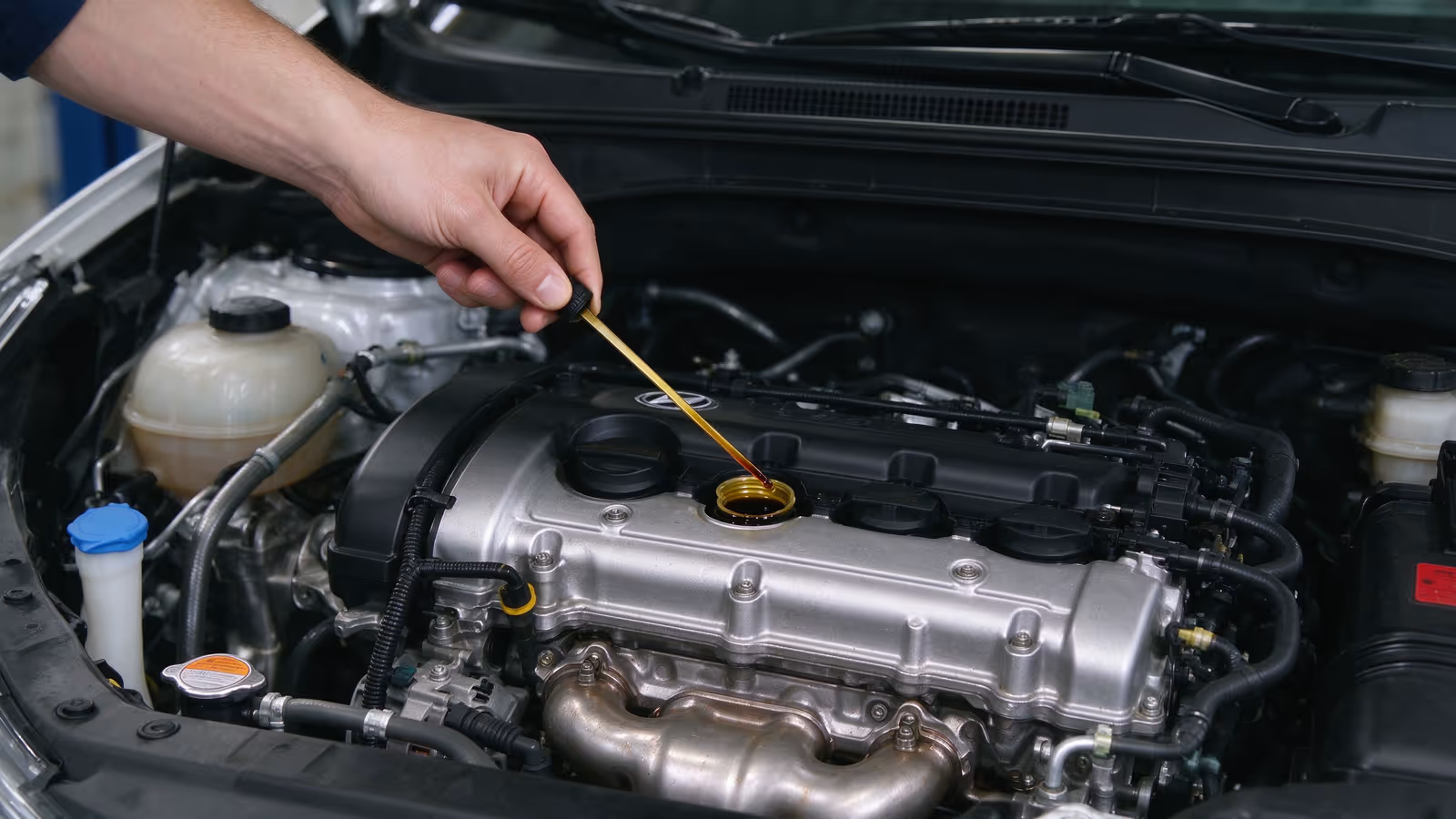
Why Low-Viscosity Demand Is Rising
Low-viscosity engine oils such as 0W-20, 0W-16, and 5W-30 have gone from a niche to a mainstream category. Modern engines are designed for them to improve fuel economy and reduce emissions, and vehicle makers increasingly require them. For distributors, this is both an opportunity and a challenge. The demand is real and growing, but low-viscosity oils carry specific technical requirements and need the right vehicles and markets to sell well. Here is what wholesale buyers should understand about the low-viscosity engine oil segment.
Two forces drive the shift to low-viscosity oil. The first is fuel economy regulation. Vehicle makers are under pressure to cut fuel consumption and CO2 emissions, and low-viscosity oil reduces internal friction, saving fuel. The second is modern engine design. Newer engines use tighter clearances and advanced technology that require thinner oil to flow quickly at startup and reach every part. As a result, oil standards like ILSAC GF-6 and API SP are built around lower-viscosity grades. This is not a passing trend—it is the direction the whole market is moving.
0W-20 vs 5W-30 vs 0W-16
The main low-viscosity grades serve different engines. 5W-30 is the most widely used, fitting a huge range of modern gasoline engines and offering a balance of fuel economy and protection. 0W-20 is increasingly the factory fill for newer cars, especially in North America and Asia, delivering better cold-start flow and fuel economy. 0W-16 is a newer, thinner grade specified by some Japanese and Korean makers for maximum efficiency. The right grade is defined by the vehicle manufacturer’s requirement, not by preference. Wholesale buyers should stock the grades that the vehicles in their market actually specify.
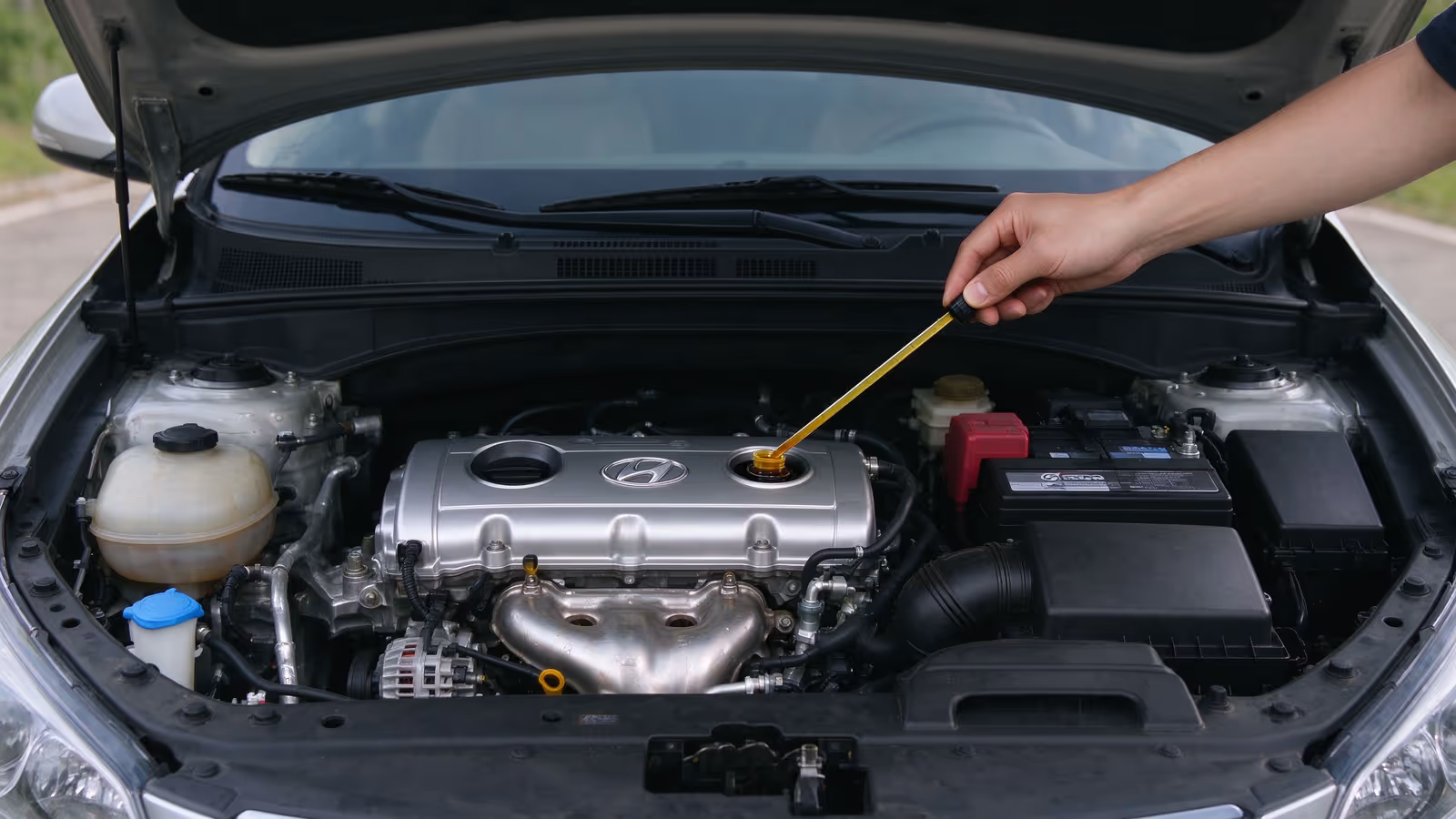
Fuel Economy and Protection Trade-offs
Low-viscosity oil saves fuel, but buyers often worry it sacrifices protection. In modern engines designed for these grades, the thin oil is correct and provides full protection—the engine’s tolerances and the additive package are matched to it. The danger is using low-viscosity oil in an older engine that requires a thicker grade, or using a poor-quality low-viscosity oil with weak additives. Quality matters more than ever with thin oils. Choose products from suppliers who meet the full API and ILSAC specification, so buyers get both the fuel economy and the wear protection.
Which Markets and Vehicles Need It
Low-viscosity demand is strongest where modern cars dominate. In North America, Japan, Korea, Europe, and increasingly in urban markets in the Middle East and Asia, newer vehicles specify 5W-30, 0W-20, or 0W-16. Agricultural, mining, and heavy-duty markets still rely on thicker diesel grades like 15W-40, so low-viscosity is mainly a passenger-car and light-vehicle story. Before stocking, look at the age and type of vehicles in your market. If the local fleet is mostly older vehicles, low-viscosity grades will move slowly; if modern cars are common, they should be a core part of your range.
How to Stock and Price Low-Viscosity Grades
Stocking low-viscosity oil is straightforward once you know your market. Start with the grade that covers the most vehicles, usually 5W-30, then add 0W-20 if modern cars are common. Carry a quality product with the full API and ILSAC specification so it is credible with workshops and dealerships. Pricing tends to be a premium over conventional grades because synthetic base oils are needed to meet the performance, so these products support higher margins. Offer them alongside your conventional range so every customer finds the right oil. As the vehicle park modernizes, low-viscosity will only grow.
Common Misconceptions
Several myths confuse the market. Some believe thin oil means weak protection—false for engines designed for it. Some think any 0W-20 is the same, ignoring that quality and additives vary. Others assume low-viscosity oil is only for new cars, when many slightly older vehicles also specify it. And some buyers use one low-viscosity grade for everything, instead of following each vehicle’s spec. As a distributor, correcting these misconceptions is a selling opportunity: customers who understand the product trust you and buy more.
Grow With the Low-Viscosity Trend
Low-viscosity engine oil is the future of the passenger-car segment, and the wholesale market is following. Understand which grades your vehicles need, stock quality products with the right specifications, and price them as the premium category they are. Buyers who move early build a reputation as the supplier with the right oil for modern engines—and that reputation converts into steady, growing orders.